

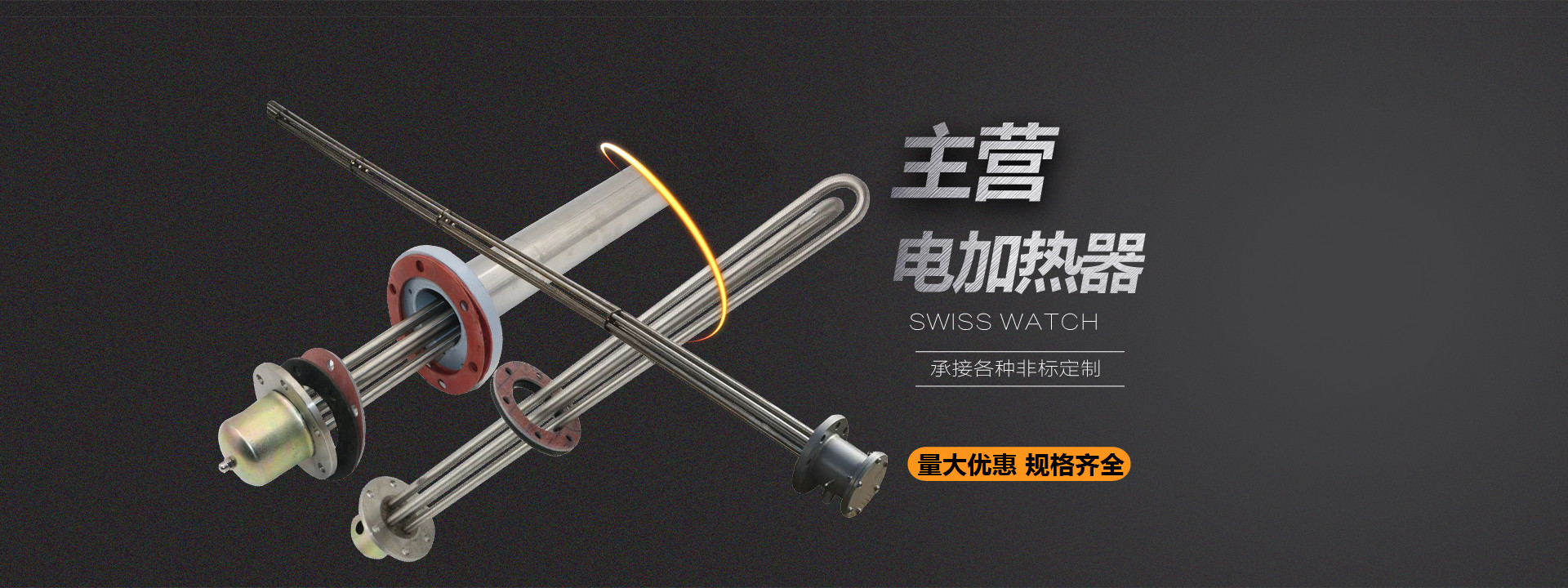
When operation and maintenance personnel in oil tank farms replace or add sheathed tubular electric heaters, they often encounter problems such as mismatch between the heating tube and the original installation interface, insufficient wiring space, and confusion of spare parts due to the absence of surface markings. These are mostly related to incomplete parameter confirmation during the selection stage. Taking the HRY2 sheathed tubular electric heater as an example, its structure consists of a metal sheath tube, heating wire, and insulating material, and the following information needs to be checked item by item according to on-site conditions.
First, confirm the heating tube diameter and total unfolded length. The tube diameter affects the fit when inserted into the oil tank flange or reserved hole, while the unfolded length determines the coverage area of the heating zone. If mechanical drawings or sketches are already available on site, it is recommended to provide them with the order to facilitate verification of the bending shape and outlet orientation.
Second, clarify the lead wire form and length. Lead wires have different methods such as direct outlet and terminal blocks, and the length needs to be determined in combination with the thickness of the tank insulation layer and the position of the junction box. At the same time, note that the working voltage must not exceed 1.1 times the rated value, the shell should be effectively grounded, and the grounding resistance should comply with on-site power distribution specifications.
Third, check the voltage and power combination. Voltage, power, and sheath length are related. During selection, the power density needs to be calculated according to the temperature requirements for maintaining oil fluidity, so as to avoid excessive surface load causing sheath overheating.
Fourth, if surface marking is required, specify the marking content to facilitate later identification and inventory management. Finally, state the order quantity and delivery deadline. It should be noted that the internal structure of a tubular heater is difficult to fully understand from the outside, and relying only on the model code may omit details. Providing drawings or sketches when ordering is an effective way to reduce rework.
At the oil outlet position of the oil tank, the heater usually needs to ensure oil fluidity at that location. During operation and maintenance, the output should be adjusted in combination with the temperature sensor signal to avoid excessive local temperature.
