
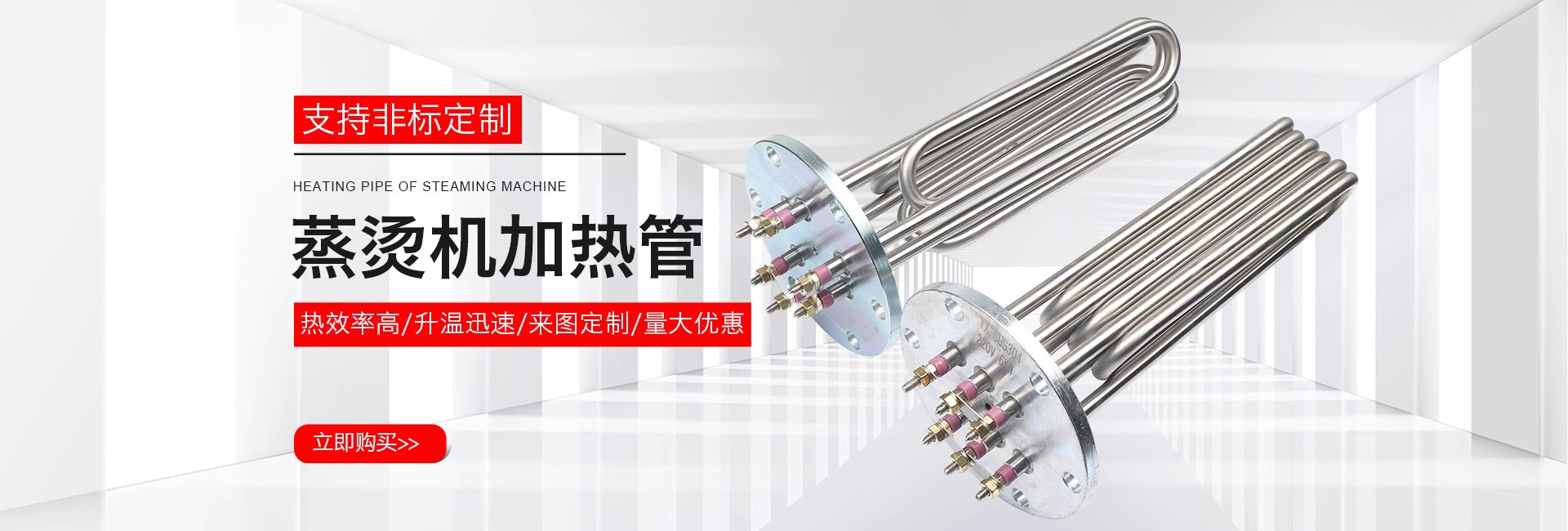
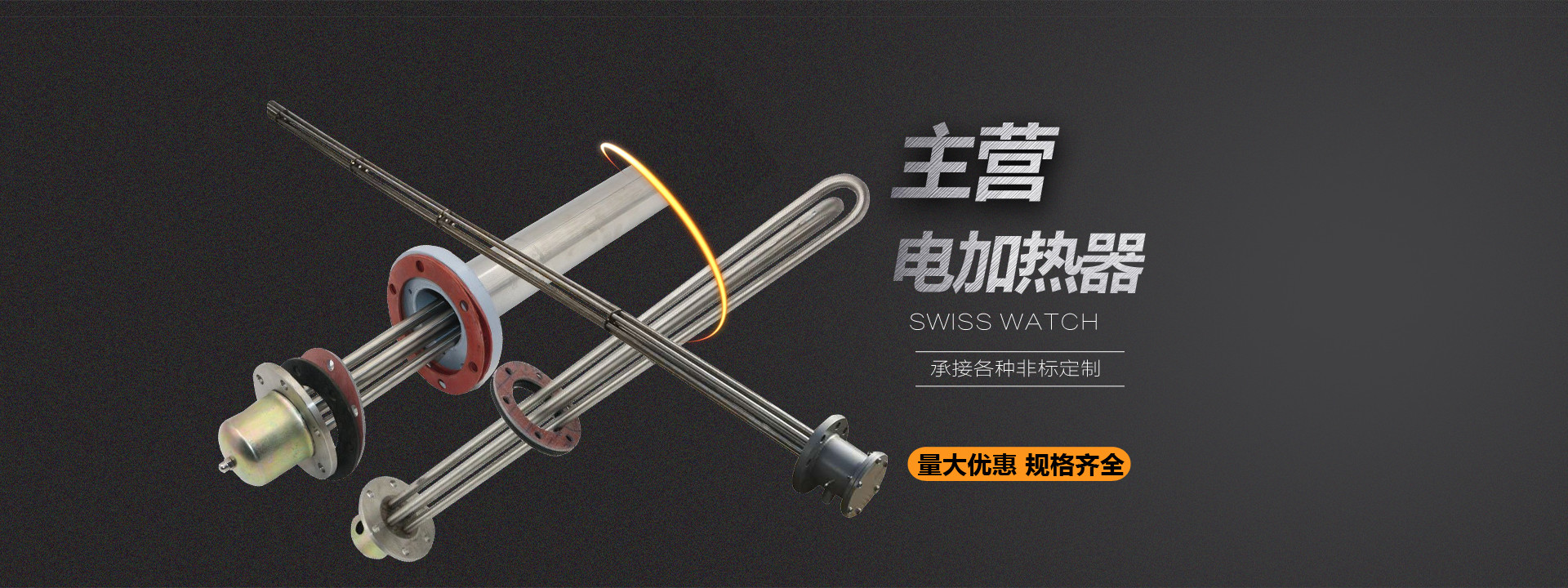
In tank tracing, pipeline insulation, or water treatment circulation systems, designers often need to choose between flange-type electric heating tubes and threaded or insertion-type solutions. The FJ-25 flange-type electric heating tube has a design continuous operating temperature of 130°C, and its selection core lies not only in the power rating but in the matching relationship between surface load and medium flowability. The following lists the key points that design and selection personnel need to check one by one from a comparative analysis perspective.
Point 1: Correspondence between continuous operating temperature and surface load. Continuous operation at 130°C means that the tube material and insulation structure must remain stable within this temperature range. When the surface load is too high, the tube wall temperature will be significantly higher than the medium temperature, easily causing local overheating on the tube wall; when the surface load is too low, the tube length or quantity must be increased, affecting the flange hole arrangement. During selection, the allowable surface load range should first be determined according to the medium temperature and flow rate, and then the single-tube power should be derived, rather than determining the power first and then matching the tube diameter.
Point 2: Medium flowability determines the direction of surface load selection. Static or low-flow-rate media (such as high-viscosity oils and closed tanks) have poor heat dissipation conditions, so a lower surface load should be selected; flowing media (such as circulating water and flowing process liquids) have stronger convective heat transfer, so the surface load can be appropriately increased. Compared with threaded electric heating tubes, flange-type structures usually have higher single-unit power. If the medium flowability is insufficient, heat is not easily dissipated, so more attention should be paid to the matching of surface load and flow rate.
Point 3: Verification of flange specifications and installation space. The flange-type structure facilitates centralized installation of multiple tubes and overall replacement, but the nominal diameter of the flange, the center distance of bolt holes, and the consistency with the tank interface must be verified. Compared with single threaded connection solutions, flange-type electric heating tubes can be withdrawn as a whole group during maintenance, making them suitable for occasions requiring regular cleaning of tube wall scale; the disadvantage is that they occupy a larger interface size, and renovation projects need to confirm the tank opening conditions in advance.
Point 4: Electrical parameters and circuit configuration. The rated operating voltage of electric heaters is usually in the 220V class. When combining multiple tubes, the star or delta connection and the power distribution per phase must be clarified to avoid three-phase imbalance. During the design stage, the correspondence between the number of control cabinet circuits and the single-tube power should be confirmed.
Point 5: Simplified maintenance tips. Before shutdown maintenance, power should be cut off and the tube body should be allowed to cool down, and the flange sealing surface and tube wall scale should be inspected; where the surface load is selected too high, the scaling rate may accelerate, and the inspection cycle should be shortened.
