
Darui Electric recommends
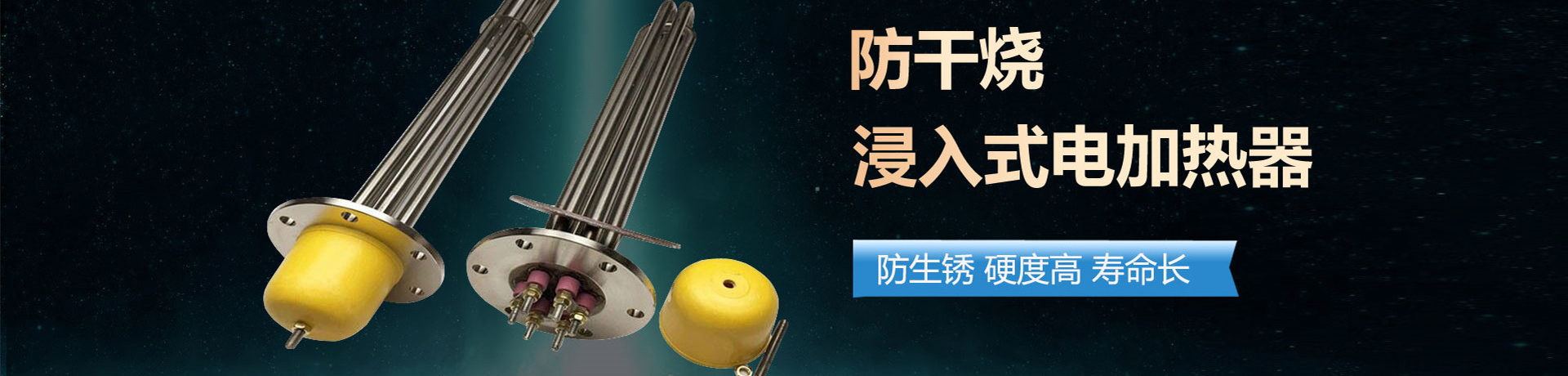
Flange heater is composed of multiple heating tubes welded on a flange for centralized heating. It is mainly used for heating in open or closed solution tanks and circulation systems.
Flange heater The heater where the heating steam and the heated feed water do not directly contact, and the heat exchange is carried out through the metal wall, is called a surface heater. In this type of heater, due to the heat transfer resistance of the metal, the heated feed water cannot reach the saturation temperature under the steam pressure, making its thermal economy lower than that of a mixing heater. The regenerative system is simple, easy to operate, and requires less monitoring workload, so it is widely used in power plants.
Precautions for using flange heaters:
1. Do not use unstable containers. Before installing the heater, ensure that the container is placed stably, then install and fix it. Unstable containers may tip over, spill liquid, cause dry burning of the heating tube, and lead to fire, electric shock, and other dangers.
2. Do not arbitrarily modify or deform the heater. Random deformation or modification may change the internal structure of the heater, affect electrical performance, and may cause fire, leakage, electric shock, and other dangers.
3. Do not place the heating tube in a container lacking water or with sediment. Heating the tube in liquid with many impurities may cause surface scaling, and the heat generated cannot be dissipated in time, leading to damage to the heating tube. Also, ensure that the heating liquid is not below the normal liquid level, otherwise it may damage the heating tube or cause fire.
4. Do not install the heater arbitrarily in a high-humidity air outlet. Installing it in a high-humidity air outlet may easily cause the heating tube to become damp, reduce insulation, and may cause leakage, electric shock, and other dangers.
5. Do not pile heavy objects on the power cord. If the power supply line is long, check regularly whether the line is squeezed by heavy objects. If found, remove the objects in time. Prolonged squeezing and friction may damage the wire sheath, causing leakage, electric shock, or even fire.

Note: The above information and technical parameters are compiled and released by Yangzhou Darui Electric Co., Ltd.
