
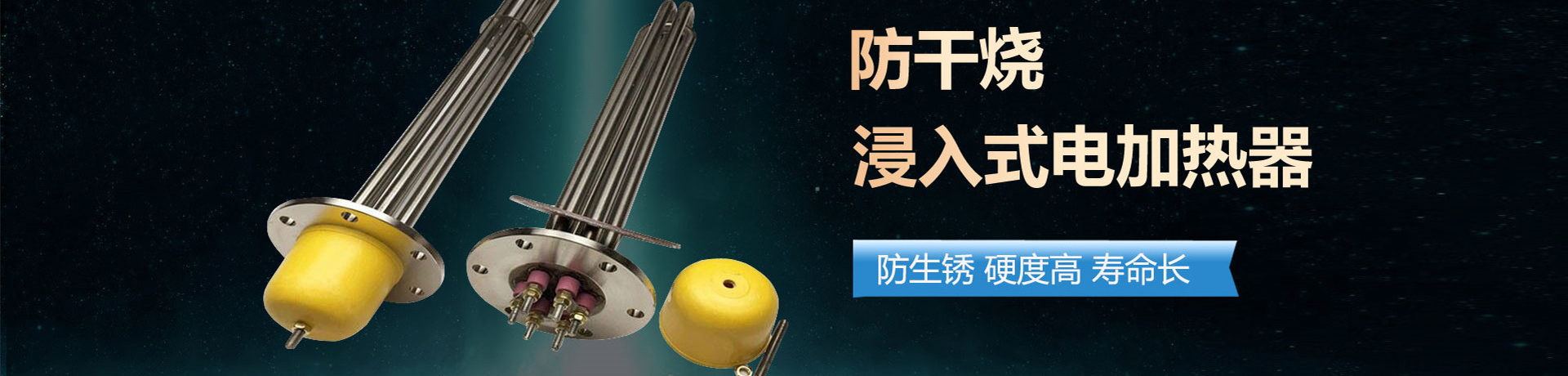
| What is "dry burning" of explosion-proof electric heaters? |
| What is "dry burning" of explosion-proof electric heaters? For the safety device of explosion-proof electric heaters, its characteristics are quite obvious. Let's take a look at the details below. First, its equipment is relatively reasonable, and the overall technology is very mature. This means that abnormal situations during operation are rare, thus reducing usage costs. Moreover, during installation, the overall installation period is relatively short, which better ensures safe completion of operation. Second, its technology is very reliable, adopting an internal heat cycle heating method, which improves its utilization rate and ensures energy-saving effects. During operation, its cost is very low. The planetary reducer indicates that an important point is that this safety device is very reliable and can be used in many different industries, with more obvious effects. For example, it is used in processes such as hot pressing, calendering, and extrusion. Currently, explosion-proof electric heaters on the market are generally equipped with various temperature controllers or thermal protectors. These components can cut off the circuit and stop heating when the water being heated reaches the set temperature at the test point; when the water temperature at the test point drops to the lower limit, the device will automatically close. Many explosion-proof electric heater manufacturers demonstrate products with such temperature controllers under long-term power-on in the air to prove that their products can "prevent dry burning." In fact, this so-called anti-dry burning promotion, if not intentionally misleading by the manufacturer, is a conceptual misunderstanding by the product maker. Indeed, this demonstration itself does not prove that the product can "prevent dry burning"! On the contrary, it proves that in the absence of water, the product continuously and repeatedly dry burns. Electric heating "dry burning": The fatal "killer" of solar water heaters "Dry burning" refers to the heating state when there is no water or the water level is below a certain amount in the water tank during electric heater heating. Dry burning is not a set working state but an accident in system operation, i.e., a fault state. The continuation of this state will lead to more serious consequences. When the electric heater "dry burns" in the water tank, the high temperature generated by the electric heater is conducted to the connection part of the water tank and repeatedly heats, damaging the sealing ring (gasket), insulation layer, and water tank. Compared with most "quick heating" type electric heaters, a fully cast aluminum electric heater with the heating element and sealing surface integrated as one has a faster and higher temperature rise at the junction with the water tank during dry burning, accelerating the aging of the sealing ring more quickly, causing greater harm. In a single solar water heating system, the "anti-dry burning" of the auxiliary electric heater may only need to achieve "preventing continuous dry burning," i.e., when power is applied in the absence or shortage of water, the system should be able to terminate operation within a limited time before consequences occur, cutting off power and waiting for handling. Before the absence or shortage of water is eliminated, regardless of how the temperature controller acts, whether the system power is cut off or not, it will not be powered again. Of course, if it can be achieved that no power is applied when there is no water or water shortage, or no dry burning occurs due to water absence (shortage), it is actually a more thorough sense of "anti-dry burning." Many control instruments on the market have the function of cutting off power when water is absent (shortage), but sometimes due to sensor instability, the signal of water absence (shortage) is uncertain. In fact, once an electric heater is inserted into the water tank of a solar water heater, it becomes a storage-type electric water heater. Storage-type electric water heaters have formed a complete production technology management system and implementation standards after long-term application. According to (GB4706.1—12) requirements, such storage-type electric water heaters should not only be equipped with an auto-reset temperature controller but also a non-auto-reset device specifically for anti-dry burning. When the water being heated in the heater is less than a certain amount, this non-auto-reset device will forcibly cut off the circuit and stop heating. Only after relevant personnel confirm that the fault state has been eliminated and manually reset the device can the system be put into operation again. This prevents the serious consequences of dry burning accidents.  |
