
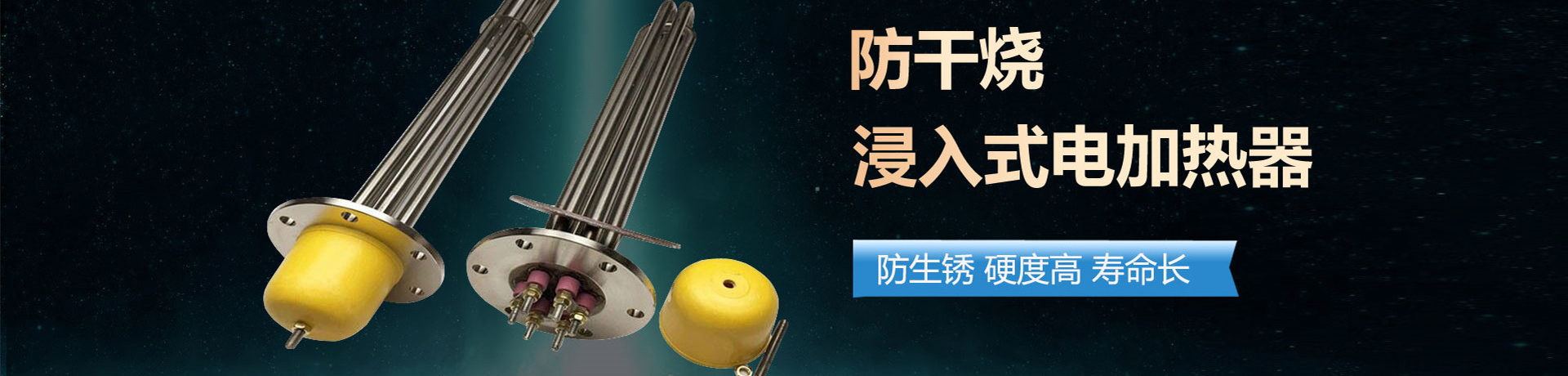
Explosion-proof storage tank heating rod
The company's main business can be divided into three major segments: 1) Civil electric heaters, 2) Industrial electric heaters, 3) Optical communication and power lithium battery precision steel shell materials. Although the company's core business of electric heaters covers many fields, it is centered on electric heater technology and applied to various fields. In 2018, the company's civil electric heater business grew rapidly due to: 1) Environmental protection campaigns and supply-side reforms led to the closure of some small competitors; 2) Meanwhile, as component companies are in a weak position in the industrial chain, complete machine manufacturers are dominant, and companies like Gree and Midea mainly purchase from suppliers using notes, and due to the overall tight capital chain of private enterprises, some small companies exited due to capital chain issues. It is expected that the company's civil electric heater revenue will continue to grow rapidly in 2019: 1) Capacity exits of small enterprises in air conditioning electric heaters may still exist. 2) The company will actively seek a larger supply share from core companies, while consolidating old customers and vigorously developing new ones. 3) Expansion into other civil small appliances: becoming a strategic supplier for Supor, and developing new energy vehicles and rail transit businesses. 1) Starting from 2017, influenced by various policies such as environmental protection, energy, and new energy subsidies, coupled with the fact that the original production lines of mainstream polysilicon factories are reaching the end of their service life and need to be replaced, mainstream polysilicon enterprises have accelerated technological transformation. At the same time, to reduce energy costs, new projects have moved westward, driving a significant increase in new investment. The company's orders for reduction furnaces and polysilicon electric heaters have continued to increase. 2) With the slow recovery of oil prices, capital investment in oil and gas has increased. Regal Tech leverages its technical advantages in high-end equipment manufacturing to compete across industries, and orders for oil and gas processing equipment have grown. In 2018, orders were full, but production capacity was limited. It is expected that after solving the capacity issue in 2019, the company's revenue and profit will significantly increase. The company has strong fundamentals. With the improvement of market risk appetite, the company's valuation will be repaired. We give the company a 25x valuation for 2019, with a target market value of 47 billion yuan, an upside of 22%. This is the first coverage, and we give a "Buy" rating. Risk warning: intensified competition leading to declining gross margins; significant fluctuations in raw materials causing a decline in profitability; slowdown in air conditioning industry demand. Among home appliance component companies, Sanhua Intelligent Controls is widely recognized as an excellent company. The core logic is that the company has core technologies related to thermal management, applying and advancing from air conditioning thermal management to automotive thermal management, continuously expanding the company's growth ceiling. So, as a leading company in air conditioning electric heaters, Dongfang Heating, expanding from civil to industrial electric heating in the air conditioning electric heating field, with continuously enriched downstream application areas, could it become a "little Sanhua"? The company is currently the largest manufacturer of air conditioning auxiliary electric heaters in China and one of the very few suppliers in the domestic market that can achieve large-scale production of polysilicon electric heating systems. The company's main business can be divided into three major segments: civil electric heaters, industrial electric heaters, and optical communication and power lithium battery precision steel shell materials. Electric heaters are a general component. Although the company's core business of electric heaters covers many fields, it is centered on electric heater technology and applied to various fields. Leveraging its strong R&D and design capabilities, high process levels accumulated over a long period in the air conditioning electric heating industry, and strong quality control capabilities, the company actively expands its application scope to civil electric heating fields such as electric vehicles and small appliances, as well as industrial electric heating fields such as oil and gas extraction and pipeline transportation, petrochemicals, chemicals, ships and offshore platforms, nuclear power, and metallurgy. From the company's business structure, civil electric heaters still account for the largest proportion, with civil electric heater revenue accounting for over 60% of total revenue in 2018. Among civil electric heaters, air conditioning business revenue accounts for about 70%, making air conditioning electric heaters the company's largest business unit. An air conditioning auxiliary electric heater is a device that improves the heating efficiency of air conditioners. When the outside temperature is low, the efficiency of the air conditioning compressor decreases. If heating relies solely on the compressor, it takes a long time to raise the room temperature to the ideal level. With an auxiliary electric heater, the surrounding air is quickly heated and sent into the room through the air conditioner's fan, significantly improving the heating effect. Air conditioning electric heaters are now relatively mature components. Since air conditioning cooling mainly relies on the compressor, to improve the energy efficiency ratio, air conditioning manufacturers impose certain limits on compressor power, choosing lower-power compressors as much as possible while achieving the same cooling effect. However, using a lower-power compressor affects the heating effect, so manufacturers generally use higher-power auxiliary electric heaters to ensure heating performance. However, electric heaters themselves are energy-consuming components, so how to save energy while ensuring heating effect is the main research direction of the industry. The industry mainly reduces energy consumption through continuous material evolution. The materials of air conditioning electric heaters have evolved from heating wires, resistance wires, copper materials to ceramic PTC. According to industry online data, the market size is about 30 billion yuan. In 2018, the company's civil electric heater revenue was about 1.37 billion yuan, with air conditioning electric heater sales revenue accounting for over 70% of civil electric heater sales revenue (main varieties include PTC electric heaters, electric heating tubes and components, defrost electric heaters, electric heating belts, duct-type central air conditioning auxiliary electric heaters, and heating wire heaters, mainly used for auxiliary heating of air conditioners); thus, the company's air conditioning electric heater revenue is about 1 billion yuan, with a market share of about 30%. The company's main competitors for air conditioning electric heaters are Suzhou Xingye and Guangzhou Hengmei, but they are not large in scale. As a component, the pricing of air conditioning electric heaters is subject to the procurement bargaining power of downstream manufacturers, often requiring cost control to obtain larger supply volumes. The company currently has the highest market share in the industry, with relatively advanced processes. Under the premise of ensuring quality, scale advantages can spread fixed costs, making costs more competitive than other competitors. In addition, the company mainly serves leading companies such as Gree, Midea, Haier, and Aux, forming stable supply relationships. As downstream manufacturers increasingly demand higher quality, they tend to purchase stable high-quality components, which can strengthen the company's supply stickiness. Historically, the company's civil electric heater business is highly correlated with the prosperity of the air conditioning industry. However, in 2018, the company's civil electric heating business grew much faster than the overall industry, showing a divergence. It is estimated that the company's air conditioning electric heater growth rate in 2018 was 40-50%, while industry online data shows that air conditioning production growth was 4.4% in 2018. 2) Meanwhile, as component companies are in a weak position in the industrial chain, complete machine manufacturers are dominant, and companies like Gree and Midea mainly purchase from suppliers using notes, and due to the overall tight capital chain of private enterprises, some small companies exited due to capital chain issues. The decreasing ratio of cash received from goods and labor to operating revenue in recent years reflects the tight capital flow in the industry. Therefore, the growth of the company's civil electric heating business in 2018 mainly benefited from the increase in market concentration. The company introduced shaved-fin PTC electric heater production technology. Shaved-fin electric heaters use aluminum as the main material, adopt a shaved-fin structure, are formed in one step, have fewer solder joints, fewer production process steps, and can reduce production costs; compared with the two devices currently used in air conditioning systems that mainly use copper materials, they have advantages such as light weight, low cost, good heat transfer effect, and corrosion resistance. The subsidiary Dongfang Shanyuan holds a series of invention patents for shaved-fin PTC electric heaters and also holds a series of patents for machines that produce this product. In 2018, shaved-fin PTC electric heaters sold well. In January 2019, the company signed a capital increase and share expansion framework agreement with Shenzhen Shanyuan, planning to achieve a 51% controlling stake in Dongfang Shanyuan through two capital increases in 2019. In 2019, the company will increase the promotion of shaved-fin PTC electric heaters at Midea and Haier, while actively promoting their application at Gree. The company's product types will be further enriched, widening the gap with other competitors. From an industry perspective, the air conditioning industry may face growth pressure in 2019: we previously expected domestic sales to decline by single digits in 2019, and due to the rush to export in the fourth quarter of 2018, exports also face unfavorable factors in 2019. 1) Capacity exits of small enterprises may still exist: air conditioning complete machine manufacturers are in a strong position in the industrial chain, requiring upstream suppliers, including the company, to continuously lower sales prices, leading to further reductions in product sales prices. Many small enterprises, lacking scale advantages and having higher production costs than the company, will be at a competitive disadvantage and may not receive more orders from downstream manufacturers like Gree and Midea due to cost reasons. 2) The company will actively seek a larger supply share from core companies, while consolidating old customers and vigorously developing new ones. According to company announcements, demand from old customers has increased, and the shares of major customers such as Gree, Midea, Haier, and Aux have increased compared to 2018. The bidding plans at the beginning of 2019 were mostly first bids, meaning the company's market share among core customers has further increased. On the other hand, new customer development is progressing smoothly. TCL is a new customer developed by the company in 2019, and the company also won the first bid in the bidding. Therefore, despite the expected pressure on overall air conditioning industry sales in 2019, we expect the company's air conditioning electric heating business to maintain stable growth. Due to the large proportion of air conditioning business, the company continues to expand in the civil electric heating field to maintain business growth stability, including small appliances, new energy vehicles, and rail transit, to reduce the impact of air conditioning sales fluctuations. The market demand for improved and enjoyment-type small appliances is steadily increasing. It is expected that the company's sales of electric heaters for coffee machines, ovens, and other kitchen and bathroom small appliances will also maintain stable growth. The company's small appliance customers include Haier, Midea, Gree, Supor, Robam, Fotile, and Lejia; products are mainly used in the heating systems of dozens of small appliances such as electric water heaters, ovens, and dishwashers. The company's controlled subsidiary Shaoxing Dongfang in Zhejiang has become a strategic supplier for Supor and its shareholder French company SEB. It is expected that the annual order demand for heaters will be between 400 million and 500 million yuan. In May 2018, Shaoxing Dongfang's sales reached 7 million yuan per month, and it is expected to achieve about 30 million yuan in revenue in 2018. Shaoxing Dongfang is building new production plants, currently with limited capacity. It is expected that after the new plants are completed, capacity will significantly increase, with a target of 100 million yuan in sales in 2019, and further increases in the future. Sales of electric heaters for new energy vehicles continue to grow rapidly. The company's electric heaters for new energy vehicles are mainly used in the air conditioning system, heating system, defrosting and defogging, and battery pack heating of new energy vehicles. Since the power consumption of air conditioning units in electric vehicles is particularly sensitive to the vehicle's range, relatively energy-saving PTC materials are chosen for auxiliary electric heating in vehicle air conditioning. As early as 2006, the company began cooperating with BYD. After years of development, the company has become a leader in the domestic electric vehicle PTC electric heater field and is one of the few domestic companies to achieve mass production. At the same time, the company is actively transitioning from a component supplier of electric vehicle electric heaters to a supplier of complete vehicle electric heating modules. In 2018, the company developed new customers such as BMW Brilliance, Hyundai, and Volkswagen. In 2018, the automotive PTC division achieved sales of 83.913 million yuan, a year-on-year increase of 62.25%. Due to the strict quality system requirements for the production of automotive parts, higher requirements for product quality and production workshops, the company purchased new plants to better ensure the quality of electric heaters for new energy vehicles and promote product sales. The plants are currently being gradually relocated. It is expected that the capacity and sales performance of new energy vehicle electric heaters will significantly improve in 2019. In the rail transit heater market, the company's products mainly include train air conditioning heaters, seat heaters, and water electric heaters. Electric heaters for rail vehicles are different from ordinary devices; they require high vibration resistance, operating temperature limits, electrical safety performance, flame retardancy, and service life. Affected by the replacement of EMUs, the rapid development of high-speed railways and urban rail transit, sales continued to grow year-on-year. In 2018, the railway division achieved sales of 19.3395 million yuan, a year-on-year increase of 47.94%. Since July 2018, promoting infrastructure construction has become an important means of stabilizing growth, with the focus on making up for shortcomings. Railway and urban rail construction will directly benefit. According to data from Jiemian, as of January 30, 2019 (less than one month into the year), the National Development and Reform Commission's official website had announced approval information for at least six infrastructure construction projects, involving an investment of over 480 billion yuan, including four airport projects, one intercity railway construction project, and one rail transit project. The rail transit industry will maintain rapid development in the coming years, directly driving the continuous expansion of the number of rail vehicles. The industrial electric heating field is different from civil electric heating. The core competitiveness lies in breakthroughs in technology R&D and stable supporting cooperation with customers. In terms of technology, the company holds core patents in related heating fields; at the same time, since industrial supporting often requires customization based on customer needs, the company's stable cooperative relationship with downstream customers is particularly important. Customers of industrial electric heaters are currently mainly concentrated in the polysilicon manufacturing industry. The company is one of the very few domestic enterprises that can mass-produce electric heaters for polysilicon cold hydrogenation. Currently, the vast majority of international and domestic enterprises produce polysilicon using the improved Siemens method, but this method generates a large amount of by-product silicon tetrachloride, which is large in quantity and causes serious environmental pollution. Therefore, polysilicon production enterprises must treat silicon tetrachloride. The core treatment method is cold hydrogenation technology, and the core equipment in this technology is the electric heater and its control system. It is used and plays an important role in key links of the process, and because it must work in high-temperature, high-pressure, and highly corrosive gas environments, the performance requirements for electric heaters are very high. Originally, this type of electric heater could only be produced by large foreign manufacturers and was very expensive. Through independent R&D and close cooperation with enterprises such as Jiangsu Zhongneng and Luoyang Zhonggui, the company developed electric heater systems suitable for their cold hydrogenation process characteristics. The company has strong technical R&D capabilities in this type of product. The company later developed related industrial equipment along the polysilicon industry—polysilicon reduction furnaces. In the polysilicon production process, the resistive silicon core inside the furnace is electrically heated through the reduction furnace bottom electrode. At a certain temperature, trichlorosilane and hydrogen are mixed in a specific ratio and continuously sent into the reduction furnace for reduction reaction. The silicon precipitated from trichlorosilane reduction deposits on the surface of the silicon core, gradually growing into finished silicon rods. The company's current strategy is to supply electric heating together with the company's polysilicon reduction furnace to core customers, with obvious advantages in price and technology. The company's polysilicon reduction furnace was officially launched in 2017 and has been highly recognized by customers. The company has signed supply contracts with multiple customers such as Jiangsu Zhongneng, Xinjiang Xiexin, Inner Mongolia Tongwei, and Xinjiang Dongfang Hope. Orders from polysilicon enterprises continue to increase. Starting from 2017, influenced by various policies such as environmental protection, energy, and new energy subsidies, coupled with the fact that the original production lines of mainstream polysilicon factories are reaching the end of their service life and need to be replaced, mainstream polysilicon enterprises have accelerated technological transformation. At the same time, to reduce energy costs, new projects have moved westward, driving a significant increase in new investment. The company's orders for reduction furnaces and polysilicon electric heaters have continued to increase. In 2013, the company acquired Regal Tech, mainly to cope with the growth pressure of the industrial electric heater business due to overcapacity in the polysilicon field. The company's industrial electric heater business is also applied in the oil and gas extraction field—when extracting oil and gas, it is generally necessary to heat the natural gas that depressurizes and absorbs heat when coming out of the well to maintain a certain temperature and prevent pipeline freezing. Using electric heating has high automation, complete control and protection means, enabling remote control of natural gas wells without the need for dedicated personnel to reduce costs; on the other hand, electric heating has high thermal efficiency and does not cause pollution. Therefore, the company chose to acquire Regal Tech (specializing in the development of oil and gas extraction upstream production activities such as crude oil, natural gas, and produced water separation, as well as natural gas purification and processing technology) to enter the oil service field, creating synergies, extending the industrial chain, achieving efficient extension of industrial electric heater products to downstream industries, further broadening the business field, and increasing product added value. Regal Tech has advanced and extensive fluid separation and natural gas purification and processing technology, capable of providing customized solutions for oil and gas extraction users, ensuring that the oil and gas products meet the process requirements of downstream users, and that the produced water after treatment meets local government wastewater discharge standards or the process requirements for reinjection of oilfield wastewater. It can produce all equipment for oil and gas upstream processes, including system supporting and engineering general contracting, and also specializes in manufacturing shell-and-tube heat exchangers, direct (indirect) heaters, and electric heating equipment and systems, as well as supporting and providing specialized equipment for process auxiliary systems and utility systems. The oil service business is closely related to downstream oil prices. Starting from 2014, oil prices entered a major downward cycle, reaching a low of $27.1 in 2016, leading to reduced capital expenditure by oil and gas companies and a decline in the company's orders. With the slow recovery of oil prices, capital investment in oil and gas has increased. Regal Tech leverages its technical advantages in high-end equipment manufacturing to compete across industries, and orders for oil and gas processing equipment have grown. In 2016, the company acquired Jiangsu Jiutian. Its business includes high-performance steel-aluminum-plastic composite materials for communication optical cables and precision steel shell materials for power lithium batteries. The market demand for lithium battery shell materials is huge. The "Medium and Long-term Development Plan for the Automotive Industry" drafted by the Ministry of Industry and Information Technology clearly states that by 2020, the production of new energy vehicles will reach 2 million units, a threefold increase from 500,000 units in 2016, and by 2025, new energy vehicles will account for 20% of total sales. The company's precision steel shell materials for power lithium batteries use pre-nickel plating technology, with manufacturing processes reaching international leading levels. Domestic enterprises generally use post-nickel plating technology, which has low cost but is prone to corrosion due to process and substrate reasons. Jiangsu Jiutian uses pre-nickel plating technology, through advanced high-temperature fusion and high-pressure penetration processes, significantly improving the product's compressive and corrosion resistance, with obvious advantages in replacing imports, and has been fully recognized by high-end domestic power lithium battery customers. The company's main product, precision steel shell materials for power lithium batteries, has domestic main customers including more than 20 shell stamping enterprises such as Sichuan Changhong, Wuxi Jinyang, Shanghai Jinyang, Wuxi Kaiyue, Ningbo Guanghua, Xuwei, and Anbaili. Its end users include battery enterprises such as Japan, South Korea, and domestic Lishen, Changhong, Watma, Nanfu, B&Y, and AVIC. The performance of lithium battery shells requires customer certification. Currently, some customers have completed certification, such as Changhong New Energy. Steel shell stamping can now be mass-produced. With the gradual advancement of 5G construction in the future, optical cables, as a basic condition, will see increasing demand. Steel-aluminum-plastic composite tape, as an important component of optical cables, is mainly bonded with sheath material to form the comprehensive outer sheath of the optical cable, used to protect the cable core from moisture erosion, while also providing armor protection for the cable core, resisting external forces, and providing mechanical protection for the laying of optical cables in various application scenarios. Optical communication requires extremely high reliability and stability of the carrier, otherwise, it may lead to large-scale communication obstacles. According to statistics from the Ministry of Industry and Information Technology, in 2016, the length of new optical cables in access networks was 6.7 million kilometers, reaching a historical peak, and in 2017, it decreased to 5.18 million kilometers; but from 2010 to 2017, the length of new optical cables in metropolitan area networks continued to grow. In 2018, affected by the ZTE incident, operators had high inventory, and Q3 2018 data showed a significant slowdown in growth. We expect that with the acceleration of 5G construction in the future, it will drive the rapid growth of the company's series of steel-aluminum-plastic composite materials for optical cables. The first phase of the "Annual Production of 180,000 Tons of Lithium Battery Shell Materials, Optical Communication Composite Materials, LED Precision Steel Strips, Fine Blanking Steel, and Bundy Tube Steel Strips" project of Dongfang Jiutian has been basically completed, and some production lines will be fully operational by the end of the month, which will further increase the capacity of the company's main products, while promoting the industrialization of LED precision steel strips, fine blanking steel, and Bundy tube steel strips. In 2018, orders were full, but capacity was limited. It is expected that after solving the capacity issue in 2019, the company's revenue and profit will significantly increase. The company's civil business benefits from the increase in market concentration of air conditioning electric heating business and the market development of small appliances, new energy vehicles, and rail transit businesses. It is expected to grow at about 17% in 2019. Industrial business orders will gradually convert into revenue, with an expected growth rate of about 20%. Jiangsu Jiutian benefits from capacity expansion, with an expected growth rate of about 30%. In terms of gross margin, benefiting from the decline in raw material prices, costs have decreased, but it is expected that the gross margin of the company's air conditioning electric heaters may slightly decline in 2019, and the overall gross margin is expected to remain stable. Since the company's listing, ROE has declined significantly. In 2012, ROE was 9.76%, reaching a trough of only 2.54% in 2016. The net profit margin has played a decisive role in the fluctuation of the company's ROE. During this period, the company's net profit margin declined significantly, mainly due to the continuous decline in profitability under the pressure of upstream price reductions; since 2017, the company's net profit margin has gradually recovered, mainly benefiting from the clearance of small capacity due to environmental protection inspections. In Q3 2018, the net profit margin recovered to 8.26% (the full-year net profit margin for 2018 was 6.4% according to the performance forecast). 1) Net profit margin: We expect that the impact of the exit of small capacity in air conditioning electric heating will continue for the next 1-2 years. There is a time lag from capacity exit to resumption, and as the air conditioning industry gradually approaches the ceiling of domestic sales, the willingness of component manufacturers to enter new supply systems will be relatively weaker; from the perspective of supply and demand, procurement prices are expected to remain stable in the next 1-2 years; at the same time, the industrial business previously laid out by the company is entering the harvest period. As the proportion of industrial and Jiangsu Jiutian businesses with higher gross margins increases, the company's net profit margin will show a slight upward trend in the next few years; 2) Equity multiplier: The company plans to further increase its stake in Dongfang Shanyuan and build Shaoxing Dongfang plants, which require capital investment. It is expected that the company's debt level will increase in the future, and operations will appropriately leverage, so the equity multiplier is expected to further increase in the next few years; 3) Asset turnover rate: With the further improvement of the company's management level and further deepening of cooperation with downstream companies, the asset turnover level is expected to increase slightly in the future. Therefore, it is expected that the company's ROE level will continue to improve in the next 1-2 years. Over the past five years, the company's valuation center has been around 50 times. The company's valuation has been on a downward trend since 2016. In 2016, the industrial business performance was below expectations; in 2017, the market preferred large-cap blue chips, and the valuation of small and medium-sized companies continued to decline; in 2018, due to the overall market downturn, the company's valuation continued to decline. Currently, the company's valuation is at the lower limit of the five-year range. From a horizontal comparison of comparable companies, the average PE of the component industry from 2017 to 2018 was about 25 times (some companies had higher PE in 2018 due to performance decline, which is not representative). We believe that in 2019, the company's performance will grow well, and fundamentals will continue to improve. With the improvement of market risk appetite, the company's valuation will be repaired. We give the company a 25x valuation for 2019 (referring to the industry average valuation, still at a low percentile according to the company's historical valuation), with a target market value of 47 billion yuan, an upside of 22%. This is the first coverage, and we give a "Buy" rating. Intensified competition leading to declining gross margins; significant fluctuations in raw materials causing a decline in profitability; air conditioning
