
It is not simply a “heater + switch”, but through intelligent control strategies, it achieves efficient generation, precise transmission, and safe utilization of thermal energy. This system is widely used in fields such as petrochemical, new energy, semiconductor manufacturing, food processing, and HVAC.
The following is a detailed explanation of the system's core components, working principle, and advantages:
1. Core Components
A complete Electrothermal Electrical Integration System typically includes the following three key levels:
A. Execution Layer (Electric Heating Elements)
This is the “muscles” of the system, responsible for converting electrical energy into thermal energy.
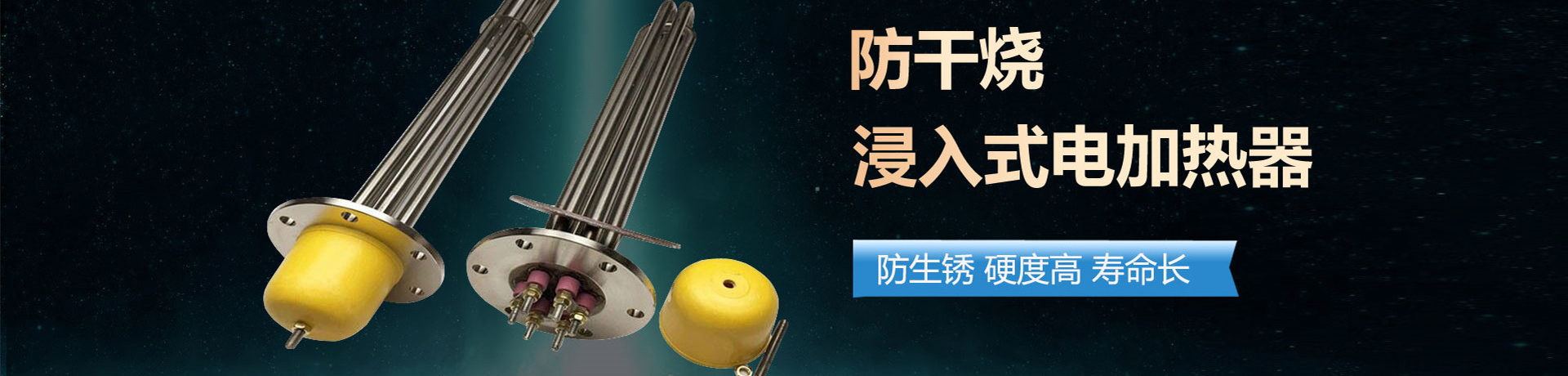
Common forms: Flanged heaters, immersion heating tubes, mica/ceramic heating bands, silicone rubber heating tapes, electromagnetic induction heating coils, etc.
Key characteristics: Select materials (stainless steel, titanium, Inconel, etc.) based on medium properties, design reasonable surface load to prevent coking or burnout.
B. Sensing Layer (Detection Sensors)
This is the “nerves” of the system, responsible for real-time feedback of temperature status.
Common devices: Thermocouples (K-type, J-type, etc.), RTDs (PT100, PT1000).
Function: Convert temperature signals into electrical signals and transmit them to the controller, forming the basis of closed-loop control. Some high-end systems also integrate current transformers to monitor the working current of heating elements for diagnosing open circuits or short circuits.
C. Control Layer (Electrical Control Unit)
This is the “brain” of the system, responsible for logical judgment and power regulation.
Core devices:
Temperature control instruments: Implement PID algorithms for precise temperature control.
Power regulators: Such as solid-state relays (SSR), thyristor power controllers (SCR/Thyristor). Compared to traditional contactors, they achieve contactless, high-frequency switching or phase angle control, greatly extending lifespan and improving temperature control accuracy.
Main control system: PLC (Programmable Logic Controller) or DCS (Distributed Control System), responsible for multi-loop coordination, interlock protection, and remote communication.
2. System Working Principle
The system operates through closed-loop feedback control:
Set target: User sets target temperature curve on control panel or host computer.
Real-time acquisition: Sensors monitor the actual temperature of the heated medium in real time.
Deviation calculation: Controller compares “set value” with “actual value” and calculates the required heating power percentage via PID algorithm.
Power execution: Controller outputs signal to drive power regulator (e.g., SCR), adjusting output voltage or duty cycle to change the heat output of the heating element.
Safety protection: System simultaneously monitors abnormalities such as overcurrent, overtemperature, phase loss, and leakage. Once thresholds are triggered, power is immediately cut off and an alarm is issued.
3. Core Advantages of “Integration”
Compared to traditional decentralized heating control, the integrated system offers significant advantages:
Precise temperature control:
Traditional contactor control typically has temperature deviation of ±5℃~10℃.
Integrated system with SCR power regulation and PID algorithm can achieve temperature control accuracy of ±0.5℃ or even ±0.1℃, especially suitable for temperature-sensitive processes (e.g., semiconductor wafer heating, precision chemical reactions).
Energy efficiency optimization:
Intelligent algorithms avoid “overshoot” and frequent full-power start-stop, reducing energy waste due to thermal inertia, typically achieving energy savings of 10%-20%.
Enhanced safety:
Equipped with multiple hardware and software protections (overtemperature protection, low liquid level interlock, current abnormality monitoring).
Contactless control eliminates mechanical sparks, inherently safer, suitable for explosion-proof areas.
Intelligent operation and maintenance:
Fault self-diagnosis: Automatically identify heating tube open circuit, sensor drift, or thyristor breakdown.
Life prediction: Monitor current change trends to predict remaining life of heating elements, enabling preventive maintenance.
Remote connectivity: Supports communication protocols such as Modbus, Profibus, can be integrated into factory IoT (IIoT) for remote monitoring and data traceability.
Compact space:
Modular design of control cabinet and heating device reduces on-site wiring complexity, easier installation and maintenance.
4. Typical Application Scenarios
Oil pipeline heat tracing: Anti-condensation and insulation of long-distance oil pipelines, requiring automatic power adjustment based on ambient temperature.
Reactor heating: Precise temperature control for viscous liquids or chemical reactors in chemical production.
Injection molding machine/extruder: Multi-zone precise temperature control during plastic melting.
New energy battery testing: Rapid heating and cooling simulation of battery packs in extreme environment test chambers.
Semiconductor diffusion furnace: Heat treatment process requiring extremely high uniformity and stability in wafer manufacturing.
5. Development Trends
Future Electrothermal Electrical Integration Systems are evolving in the following directions:
Full digital twin: Simulate heating process in virtual model, optimize control parameters before deploying to physical equipment.
Adaptive control: Use AI algorithms to allow system to automatically learn changes in thermal characteristics of medium (e.g., increased thermal resistance due to scaling), dynamically adjust PID parameters.
Green energy integration: Better adapt to fluctuating power sources such as photovoltaic and wind power, achieving flexible heating with “source-grid-load” interaction.
Summary
Electrothermal Electrical Integration System is the product of deep integration of thermal energy execution and electrical intelligent control. It solves the pain points of traditional heating methods such as rough temperature control, high energy consumption, and difficult maintenance. It is a key infrastructure for modern industry to achieve precision manufacturing and energy saving and emission reduction. For users, choosing an integrated system means higher process stability, lower total cost of ownership (TCO), and smarter management experience.

