

Introduction to BGY2 Explosion-Proof Electric Heater
Dali Electric recommends for you
BGY2 explosion-proof electric heater adopts U-shaped tubular heating elements. According to the design specifications for different heating media and power configuration requirements, it is assembled on the flange cover and inserted into the material to be heated. The large amount of heat generated by the heating element during operation is conducted to the heated medium, raising its temperature to meet the required process requirements.
Product Uses:
Mainly used for heat preservation and heating of materials in various storage tanks, containers, and oil tanks in industries such as petroleum, chemical, food, and machinery. The connection method can be flange type or threaded end face seal.
BGY2-220V/2KW explosion-proof electric heater adopts round flange and square flange forms (square flange is indicated by adding F after the model). The selected voltage can be 220V or 380V, and a temperature controller can be installed in the junction box. It provides greater convenience for users, with a long service life and relatively stable quality.
The reserved hole for flange connection is ≥Φ95. If a temperature controller is required, the reserved hole is ≥Φ110, and "T" is added after the model. The design pressure is 1.6Mpa, and the material is all stainless steel.
The explosion-proof grade of the explosion-proof electric heater is dⅡBT4. The steel pipe wiring is M24×1.5 for 380V and M20×1.5 for 220V.
Specifications and Technical Parameters:
Model Rated Voltage (V) Power (KW) Amm Lmm Working Temperature (℃) Applicable Cable (m㎡)
220V 380V
BGY2-220/0.2 220 0.2 140 240 300 12 2.5
BGY2-220/1 220 1 255 355 300 12 4
BGY2-220/2 220 2 305 405 300 12 4
BGY2-220/3 220 3 355 455 300 12 6
BGY2-220/4 220 4 405 505 300 12 6
BGY4-220/5 220 5 550 650 300 12 8
BGY4-220/6 220 6 650 750 300 12 10
BGY4-220/7 220 7 750 850 300 12 10
BGY4-220/8 220 8 850 950 300 12 16
BGY2-220V/2KW Explosion-Proof Electric Heater Usage, Maintenance and Precautions:
1. Dimension "B" in the outline drawing must be fully immersed in the oil to avoid burning out the component.
2. The heated medium should be non-corrosive.
3. When melting solid oils such as asphalt and paraffin, reduce the voltage first, then increase to rated voltage after melting to prevent excessive heat concentration and reduce component life.
4. If carbon deposits are found on the surface of the heating tube, remove the carbon completely before reuse to avoid reduced efficiency or even burning out the component.
5. The heater should be stored in a dry place. If the insulation resistance drops below 1 megohm after long-term storage, dry it in an oven at about 200°C for several hours (or apply low voltage to the component for several hours) to restore insulation resistance.
Dry in an oven for several hours (or apply low voltage to the component for several hours) to restore insulation resistance.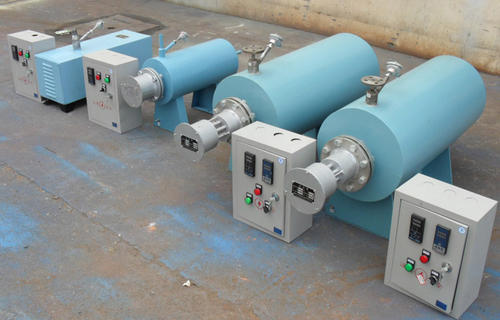
Note: The above information and technical parameters are compiled and released by Yangzhou Dali Electric Co., Ltd.

