
The JB/T 2379 standard requires the insulation resistance of electric heating tubes to be ≥50MΩ in cold state, but in actual engineering, failures of flanged electric heating tubes caused by sealing failure or insulation aging account for a large proportion of maintenance events. The following answers address high-frequency questions from technical engineers in selection, installation, and maintenance.
Surface load (W/cm²) directly affects the tube wall temperature and service life. When heating water, it is recommended to be ≤6W/cm²; for oil-based media, control it at 1–2W/cm²; for low-melting-point metals or molten salts, calculate according to the specific melting point, usually not exceeding 3W/cm². If the medium is prone to scaling, the load should be further reduced and a detachable structure should be considered.
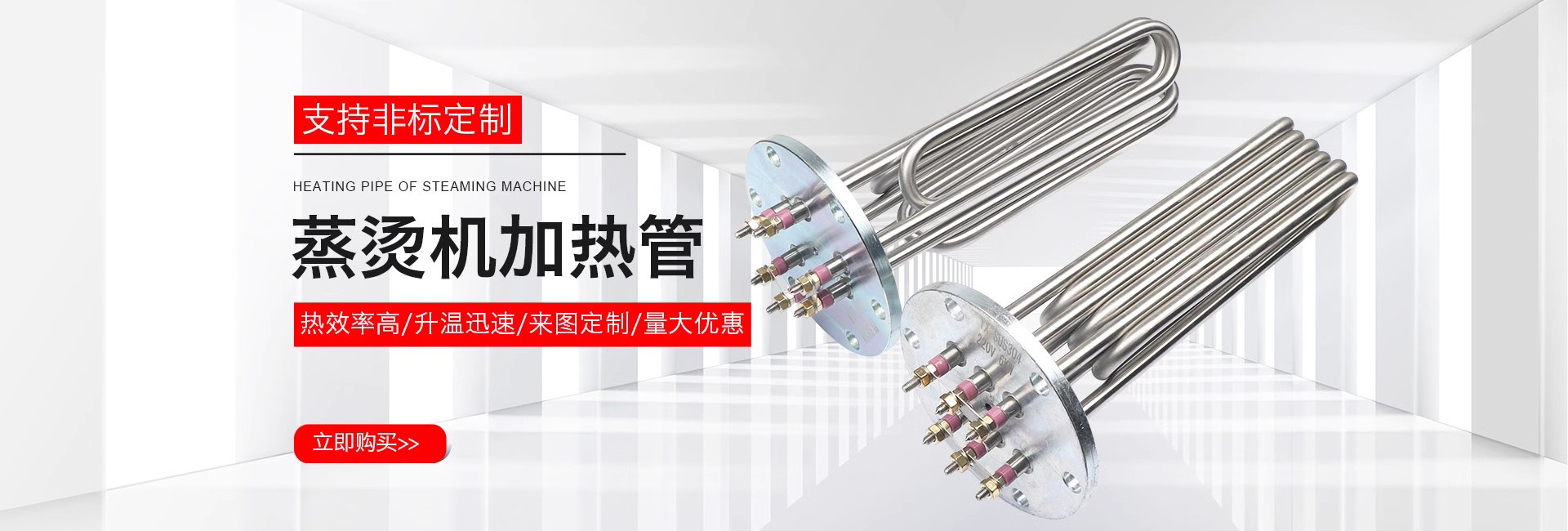
The FJ-12 type uses DN80–DN150 standard flanges, tube diameters of Φ8–Φ16mm, and single-tube power of 0.5–3kW. The arrangement is divided into triangular and concentric circle types. Triangular arrangement is suitable for circular tanks, while concentric circle arrangement is used for square or irregular spaces. The tube spacing is generally not less than 1.5 times the tube diameter to avoid local overheating caused by superimposed thermal radiation.
The protection grade must correspond to the on-site environment: IP54 is suitable for indoor dry environments, IP65 can handle humidity or light spraying, and IP67 is used for occasions that may be immersed in water or require washing. Explosion-proof terminal boxes must comply with Ex dⅡB T4 or Ex eⅡT3 standards. Fluororubber or polytetrafluoroethylene is preferred for sealing materials, with an operating temperature range of -40–200℃.
During installation, ensure that the heating zone is completely immersed in the medium to avoid dry burning. For horizontal installation, the terminal box should face upward to prevent liquid from penetrating. Regularly check the insulation resistance. If it is lower than 1MΩ, inspect the seal or replace it. If coking occurs on the tube surface, shut down and clean it; do not scrape with sharp tools.
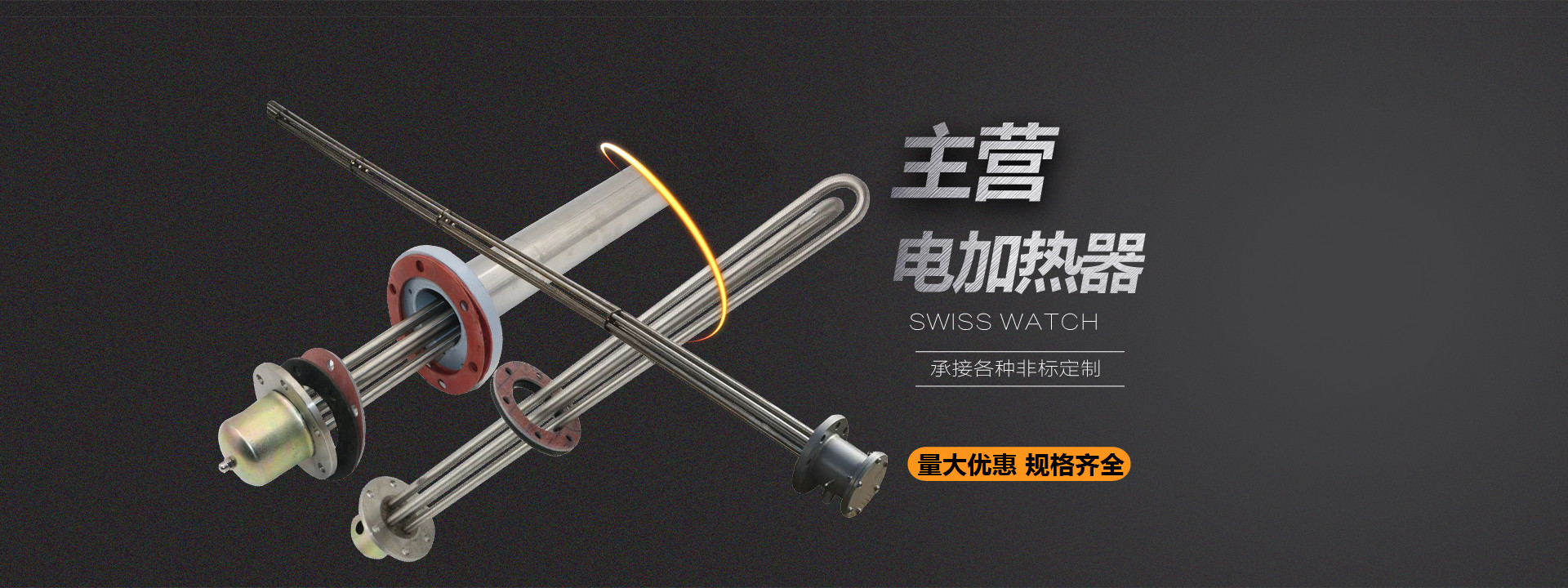
This product is suitable for heating storage tanks, pipelines, and reactors in industrial fields such as petroleum, chemical, pharmaceutical, textile printing and dyeing, light industry, and building materials. It can be equipped with a temperature controller according to user needs.