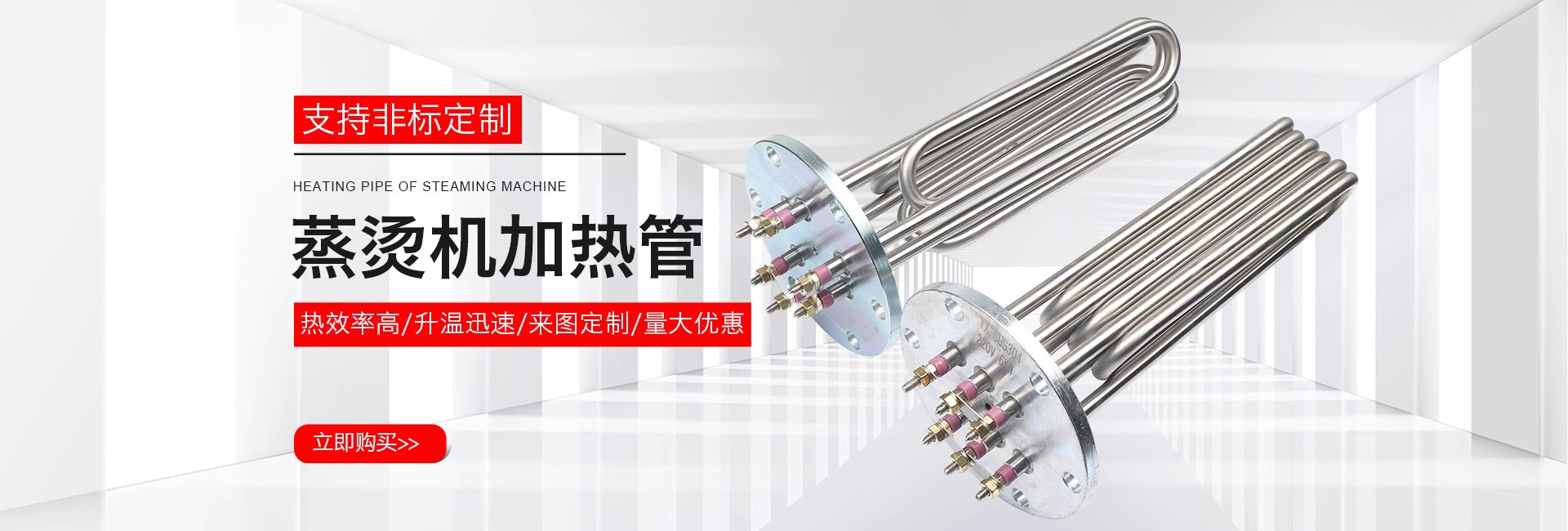
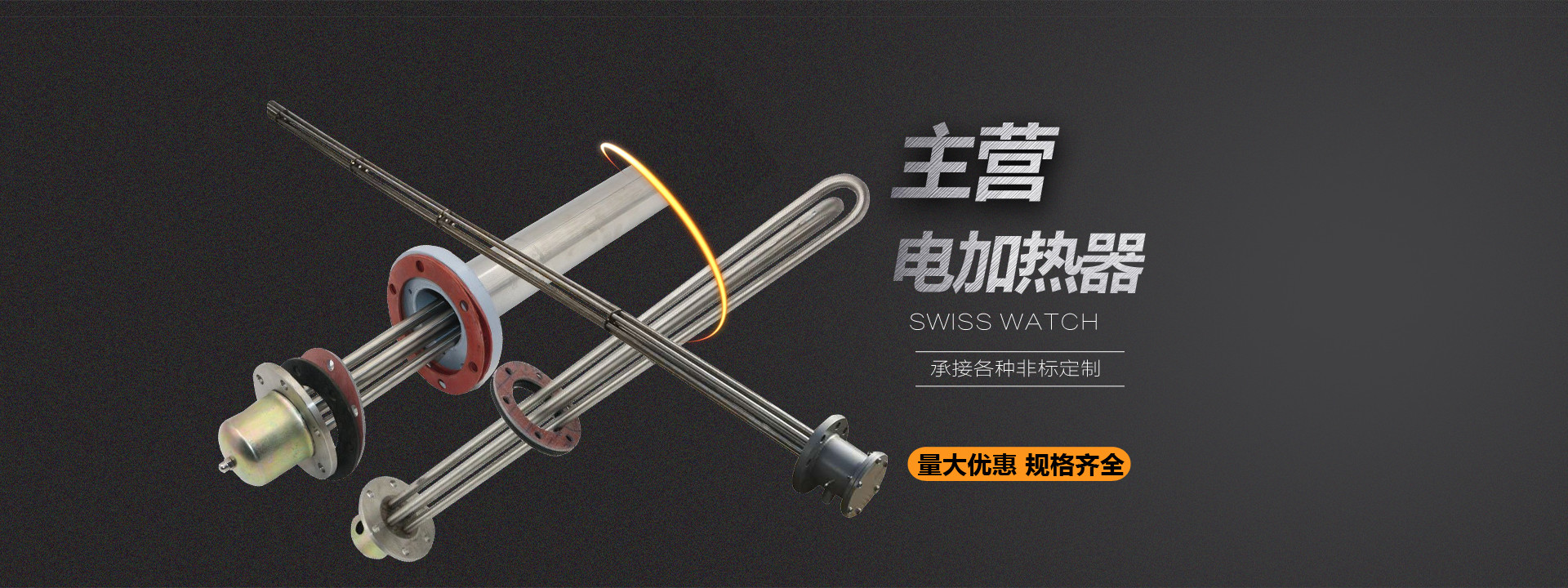

In industrial fluid heating scenarios, matching the surface power density of the heating tube with the heat exchange efficiency of the medium directly affects temperature control accuracy and component life. Taking water as the medium, for example, JB/T 2379 recommends a surface load not exceeding 2.5W/cm², while on-site issues commonly arise from insufficient selection margin or mismatch between flange specifications and tank interfaces, leading to localized dry burning or seal failure. The FJ-63 flange-type electric heating tube addresses these issues through corresponding treatments in structural design and parameter settings.
The FJ-63 uses a DN80 PN1.0MPa standard flange with a raised-face sealing surface, which can directly connect to most carbon steel or stainless steel storage tank and pipeline flanges, reducing on-site adapters. The tube body material can be 304 or 316L stainless steel, and the flange material matches the tube body, avoiding the risk of intergranular corrosion caused by dissimilar steel welding. During installation, it is recommended to add temperature-resistant sealing gaskets between flanges and tighten bolts in a diagonal sequence in stages.
The rated voltage is 220V or 380V, and the allowable operating voltage error shall not exceed 1.1 times its rated value; the enclosure should be effectively grounded. The insulation resistance of the element shall not be less than 50MΩ in cold state, and the withstand voltage test shall be 1500V/1min without breakdown. A sealing partition is provided between the wiring cavity and the heating cavity to prevent medium from penetrating into the wiring terminals. For scenarios of continuous heating of workpieces of the same specification, the function selection switch can be set to the automatic position and the heating time set; when the workpiece is heated to the set time, the power supply is automatically cut off, making it suitable for paced heating processes of batch workpieces.
Compared with threaded or single-head heating tubes, the flange-type structure does not require draining the entire tank during replacement, resulting in a shorter maintenance window; compared with electric heating solutions paired with plate heat exchangers, the FJ-63 directly immerses in the medium with lower thermal inertia, making it suitable for intermittent reactors, cleaning tanks, and heat transfer oil circulation systems with clear requirements for heating rate. During selection, the medium type, flow rate, and target temperature difference need to be calculated to ensure the surface load is within the allowable range.

