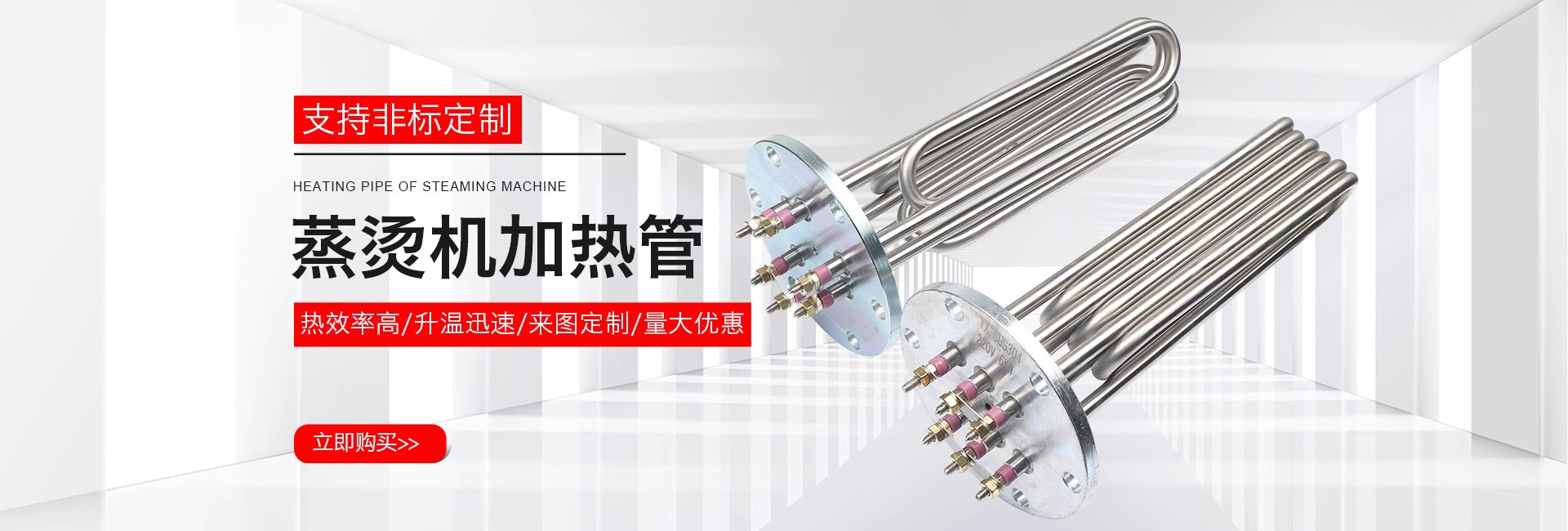
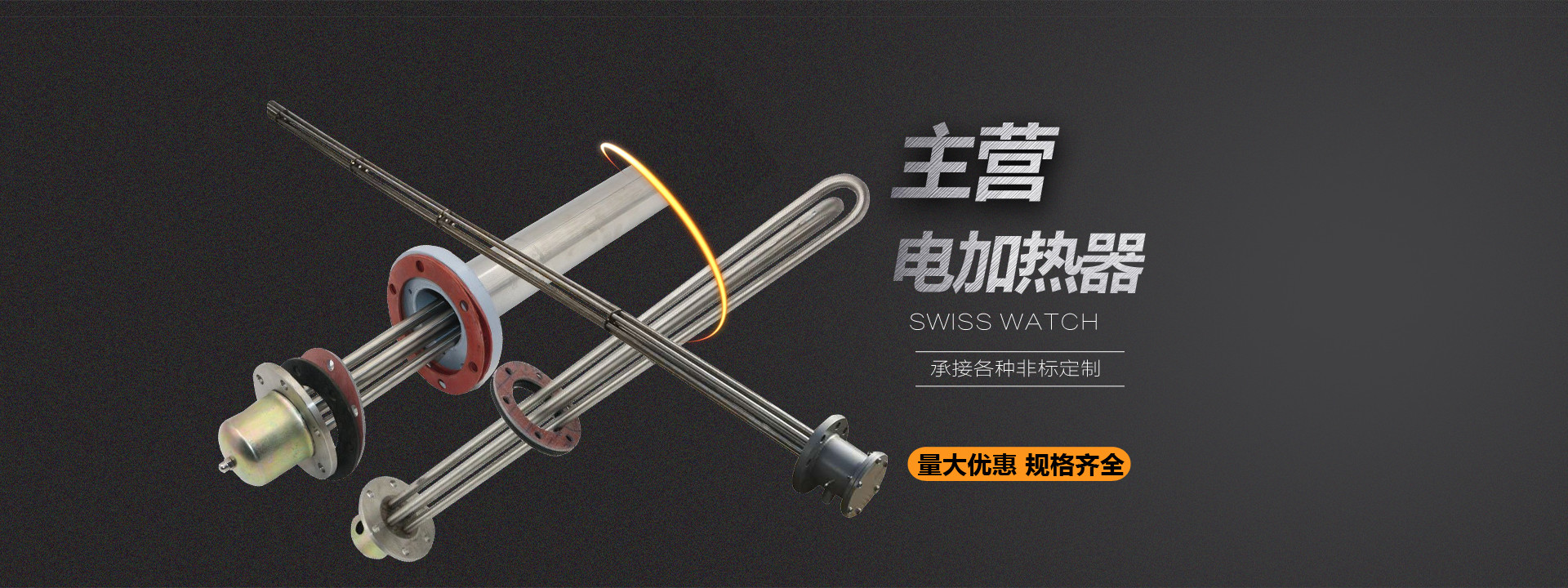

Ordinary sheathed heaters mainly consist of a metal tube, resistance wire, and magnesium oxide powder, with terminals usually exposed directly or only simply protected. Explosion-proof products add a flameproof terminal chamber and sealing structure on this basis: the terminals are enclosed in a chamber with flameproof capability, lead wires are routed out through sealed connectors or armored cables, and the gap and length of the enclosure joint surfaces are controlled according to flameproof requirements. Taking the MDR-18 as an example, its sheath uses a 304 stainless steel tube, the space between the internal resistance wire and the tube wall is filled with high-density magnesium oxide powder and compacted by tube shrinking, and the terminal chamber at the end can withstand internal deflagration without transmitting explosion to the external environment. Compared with ordinary types, explosion-proof types provide higher operational safety in humid, dusty, and locations where flammable gases or vapors are present, but their external dimensions are usually slightly larger, and space for terminal chamber operation must be reserved during installation.
The main technical parameters of the MDR-18 are: rated voltage 220V or 380V, single-unit power from 1kW to 6kW, sheath material 304 stainless steel, surface load controlled within a reasonable range, explosion-proof marking ExdⅡBT4, insulation resistance not less than 50MΩ, and dielectric strength test performed according to standards. During selection, it is necessary to verify the medium type and temperature, vessel volume, and heating time requirements, calculate the required power accordingly, and check whether the surface load is suitable for the medium. For oil-based media, the surface load should be appropriately reduced; for water and weakly corrosive liquids, sheath material compatibility should be considered while maintaining efficiency. Regarding installation, the MDR-18 can be fixed by threaded or flanged connection; the connection specifications, insertion depth, and minimum liquid level of the medium must be confirmed to avoid dry burning.
This product is used across industries including petroleum, chemical, metallurgy, machinery, heat treatment, surface treatment, building materials, electronics, materials, light industry, daily chemicals, and pharmaceuticals. In petrochemical tank heat tracing, pipeline insulation, and reactor heating, explosion-proof requirements are relatively common; in scenarios such as surface treatment bath heating and cleaning bath temperature control, explosion-proof products can cover work areas where flammable vapor risks exist. Compared with ordinary heaters, explosion-proof types are more suitable for outdoor open installations, enclosed workshops, and spaces with limited ventilation. During scheme design, engineers can use explosion-proof rating, medium characteristics, and installation conditions as preliminary screening criteria, and then complete final selection based on power and connection specifications.

