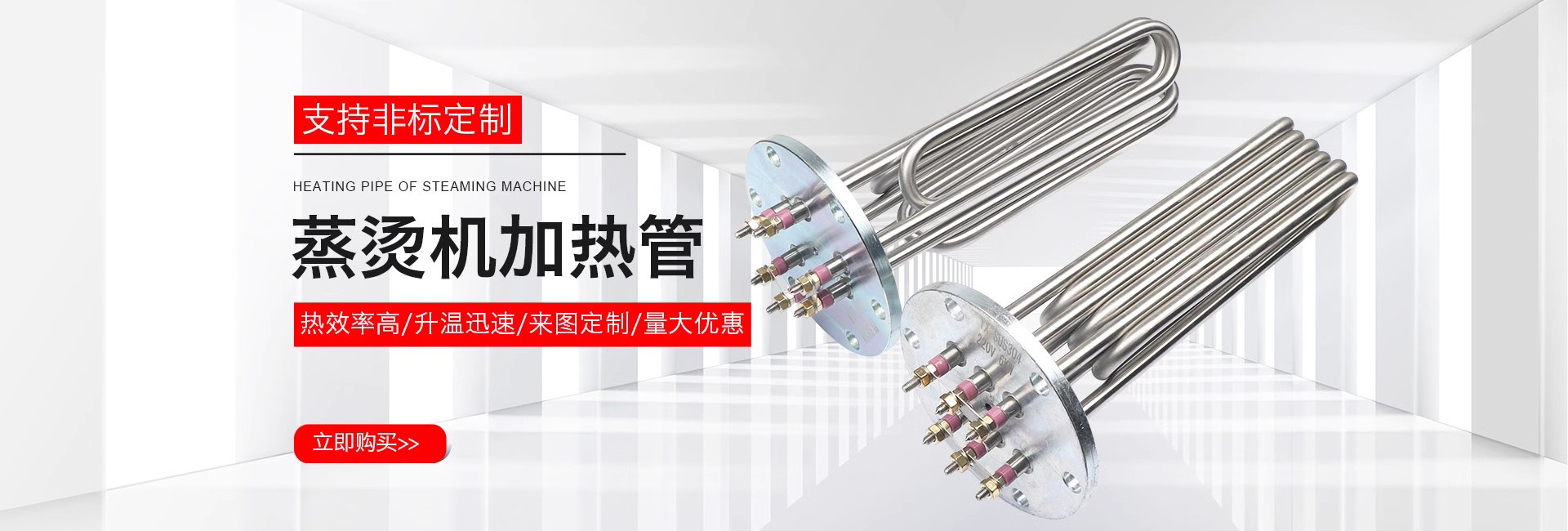
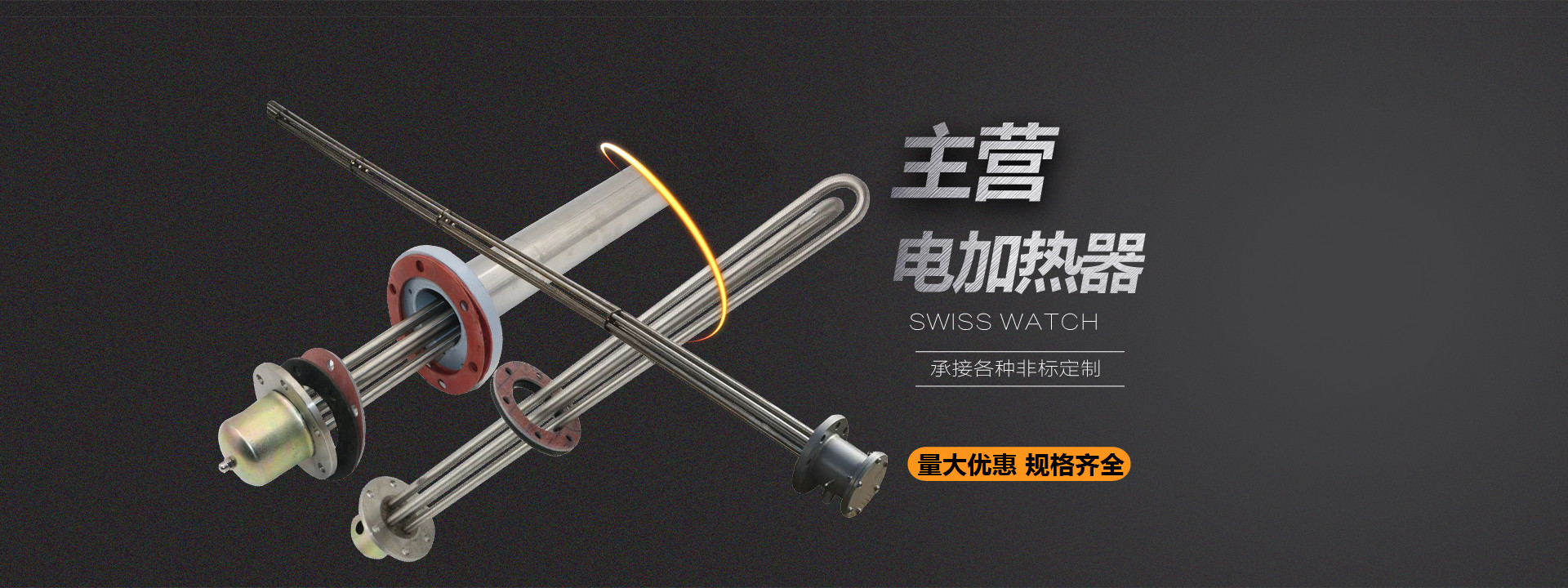

The JHR-22 type protective sleeve electric heater is designed in accordance with the relevant requirements of JB/T 2379-2016 "Explosion-proof Electric Heaters" and GB/T 34662-2017 "Safety of Electric Heating Equipment," and is suitable for low-temperature fluid heating scenarios where installation protection is required for metal-sheathed heating elements. The following comparative analysis points are listed from the perspective of design and selection for reference.
The protective sleeve serves as an isolation layer between the heating element and the medium, and its material directly affects the heat transfer rate and corrosion resistance. The JHR-22 type offers carbon steel, 304 stainless steel, or 316L stainless steel sleeves. The thermal conductivity of a carbon steel sleeve is approximately 45 W/(m·K), while that of stainless steel is approximately 16 W/(m·K). During selection, a trade-off is required: for highly corrosive environments, stainless steel sleeves should be selected, but power must be correspondingly increased to compensate for heat transfer losses; for low-corrosion, high heat transfer demand scenarios, carbon steel sleeves can be selected.
Unlike ordinary immersion electric heaters, the protective sleeve structure facilitates element replacement or maintenance without draining the system medium. The JHR-22 type offers two installation forms: flange connection and threaded connection. Flange standards cover DN50 to DN150, adapting to different pipe nozzle specifications. Compared with structures without a protective sleeve, its maintenance downtime can be reduced, but an additional layer of thermal resistance is added to the initial heat transfer path, and the sleeve wall thickness and gap thermal resistance must be included in thermal calculations.