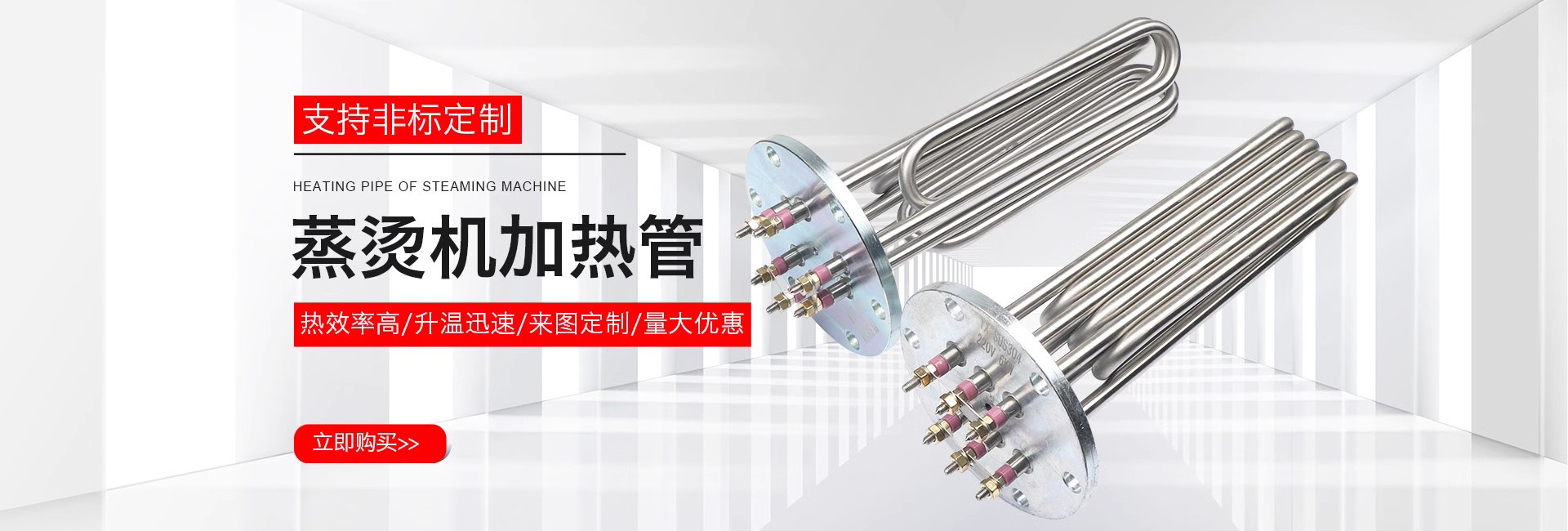
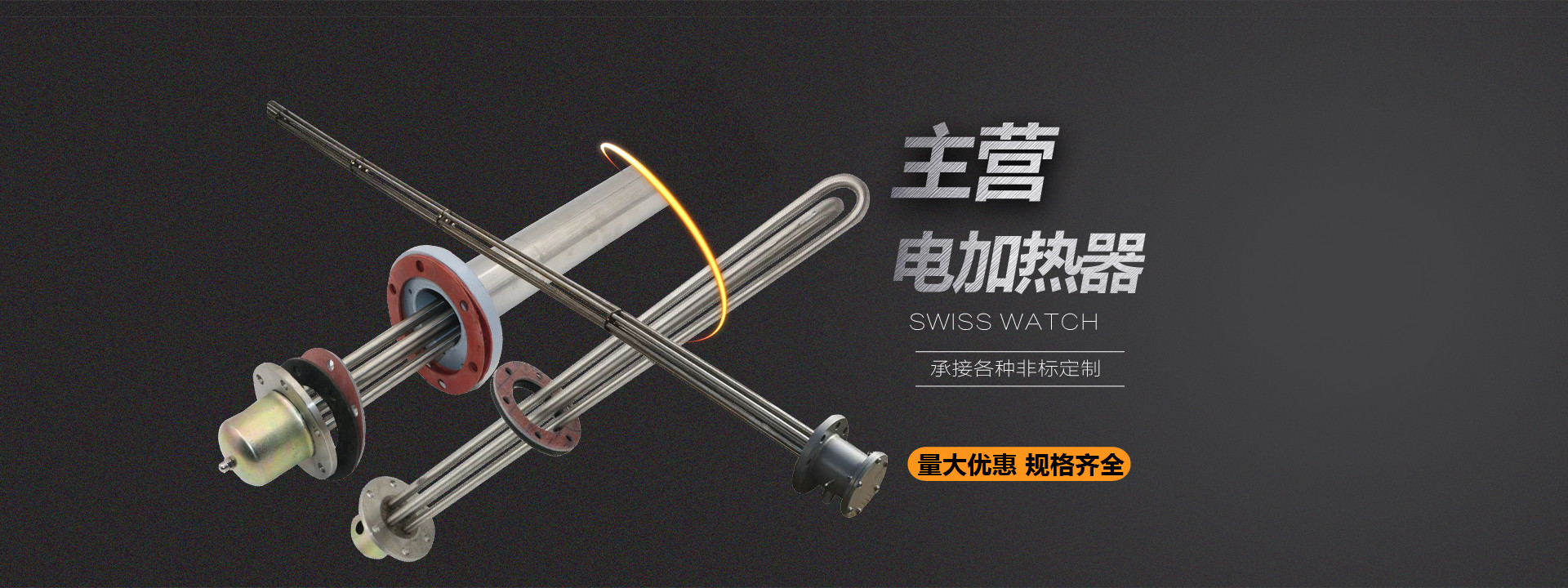

According to the JB/T 2379 standard for metal tubular heating elements, sheathed heat exchangers have clear index requirements for insulation resistance, withstand voltage strength, and mechanical protection. Procurement personnel can compare and evaluate from the following key points.
This model has an insulation resistance of ≥50MΩ and a withstand voltage strength of 1500V/1min without breakdown. Compared with heating elements without a sheath structure, the sheath design reduces the risk of the medium directly contacting the resistance wire, making it suitable for heat exchange applications with high electrical safety requirements.
The sheath outer diameter is Φ8–Φ20mm, the length is customizable from 200–6000mm, the power range is 1kW–30kW, and the rated voltage is 220V/380V. During procurement, the power density must be calculated according to the heat exchange medium flow rate and temperature rise requirements to avoid excessive surface load on the sheath caused by excessively high power density.
The operating temperature is ≤400°C, and the sheath material can be selected from carbon steel, stainless steel, or alloy materials according to the corrosiveness of the medium. Compared with ordinary heating tubes, the sheathed structure does not require draining the system during replacement, resulting in shorter maintenance downtime.
It is suitable for heating and cooling circulation systems for media such as water, oil, and air. Procurement personnel should comprehensively evaluate the initial procurement cost and full-cycle maintenance cost. Sheathed heat exchangers are more applicable in scenarios involving corrosive media or frequent disassembly and assembly.