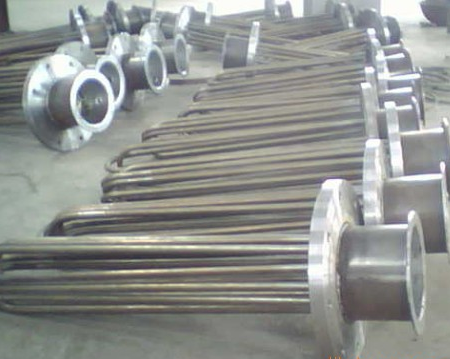
HDO-P Flat Low-Voltage High-Temperature Electric Heater
This heater can radiatively heat workpieces, with low voltage ensuring safety and a long service life. It is suitable for welding preheating and post-weld stress relief of rotating or other workpieces. The maximum temperature of the heating surface can reach 900°C.
HDO-P Flat Low-Voltage High-Temperature Electric Heater Model Dimensions (mm) Working Voltage (V) Rated Power (KW)
HDO-5.5P 620×390×70 36 5.5
HDO-6P 460×250×70 24 6
HDO-6P 540×250×70 24 6
HDO-9P 630×250×70 36 9
HDO-9P 590×320×70 36 9
HDO-11P 990×390×70 60 11
HDO-14P 930×320×70 60 14
HDO-14P 760×390×70 60 14
HDO-P Flat Low-Voltage High-Temperature Electric Heater
Our company manufactures various types of heat treatment equipment, mainly including far-infrared heaters, electrode ovens, automatic flux ovens, various electric heating and constant temperature equipment, automatic temperature control equipment, experimental furnaces, industrial kilns, welding auxiliary equipment, etc.
HDO-P Flat Low-Voltage High-Temperature Electric Heater
An electric heater is an appliance that uses electrical energy to achieve heating effects. It is compact, has high heating power, and is widely used. It adopts intelligent control mode with high temperature control accuracy and can be connected to a computer network. It has a wide range of applications, long life, and high reliability. The core of the heater principle is energy conversion, with the most common being the conversion of electrical energy into thermal energy.
Heaters are commonly used electric heating devices. People are increasingly dependent on them.
For example, electric heaters use metal to generate eddy currents in an alternating magnetic field, causing self-heating and absorption, converting electrical energy into light energy; for example, solar water heaters absorb solar radiation heat and solar light energy (photoelectric effect) and convert them into thermal energy, or both; biomass energy is a form of energy stored as chemical energy using organisms as carriers, directly or indirectly derived from plant photosynthesis. In addition, there are nuclear energy and wind energy conversion modes, but they generally need to be converted into electrical energy for use.
Electric heating is the process of converting electrical energy into thermal energy. Since the discovery that current passing through a conductor can produce a thermal effect, many inventors around the world have been engaged in the research and manufacturing of various electric heating appliances. The development and popularization of electric heating, like other industries, follow a pattern: gradually spreading from advanced countries to the rest of the world; from cities to rural areas; from collective use to household and then personal use; products evolving from low-end to high-end. In the 19th century, electric heating appliances in their infancy were mostly crude. The earliest electric heating appliances were for domestic use. In 1893, the prototype of the electric iron first appeared and was used in the United States. Then in 1909, the use of electric stoves appeared, where electric heaters were placed in the stove, meaning heating shifted from firewood to electricity, i.e., from electrical energy to thermal energy. However, the rapid development of the electric heating appliance industry truly began after the invention of nickel-chromium alloy as a heating element. In 1910, the United States first successfully developed an electric iron using nickel-chromium alloy heating wire, which fundamentally improved the structure of the iron and quickly popularized its use. By 1925, products with heating elements installed in pots in Japan became the prototype of modern rice cookers. During this period, electric heating products such as laboratory electric furnaces, glue melting furnaces, and heaters also appeared in industry. The period from 1910 to 1925 was a major development stage in the history of electric heating appliances. In both household and industrial sectors, various types of electric heating appliances emerged and were rapidly popularized, especially in households. Thus, the invention of nickel-chromium alloy laid the foundation for the development of the electric heating appliance industry.
After the 1920s, there were not as many new applications as in the previous period, but during this stage, all kinds of electric heating appliances were redesigned and continuously improved, marking a stage of advancement in the history of electric heating appliances. In household electric heating appliances, various devices were designed to be more aesthetically pleasing, durable, and robust, and most had automatic temperature and time control.
1. Power: W, Kw 1Kw=3.412BTU/hr British thermal units/hour=1.36 (horsepower)=864Kcal/hr
2. Weight: kg: 1Kg=2.204621b (pounds)
3. Flow velocity: m/min
4. Flow rate: m3/min, kg/h
5. Specific heat: Kcal/(kg℃): 1Kcal/(Kg℃)=1BTU/hr.°F=4186.8J/(Kg℃)
6. Power density: W/cm2: 1W/cm2=6.4516 W/in2
7. Pressure: Mpa
8. Thermal conductivity: W/(m℃): 1 W/(m℃)=0.01J/(cm s℃)=0.578Btu/(ft.h.F)
9. Temperature: ℃: 1F=9/5℃+32 1R=9/5℃+491.67 1K=1℃+273.15
The calculation of heating power includes the following three aspects:
Power during operation
Power during startup
Heat loss in the system
All calculations should consider the worst-case scenario:
Lowest ambient temperature
Shortest operating cycle
Highest operating temperature
Maximum weight of the heating medium (maximum flow rate for flowing media)
Steps for calculating heater power:
Based on the process, draw a process flow diagram for heating (without involving material forms and specifications).
Calculate the heat required for the process.
Calculate the heat required for system startup and the time.
Redraw the heating process flow diagram, consider an appropriate safety factor, and determine the total power of the heater.
Determine the sheath material and power density of the heating element.
Determine the form, size, and quantity of the heater.
Determine the power supply and control system of the heater.