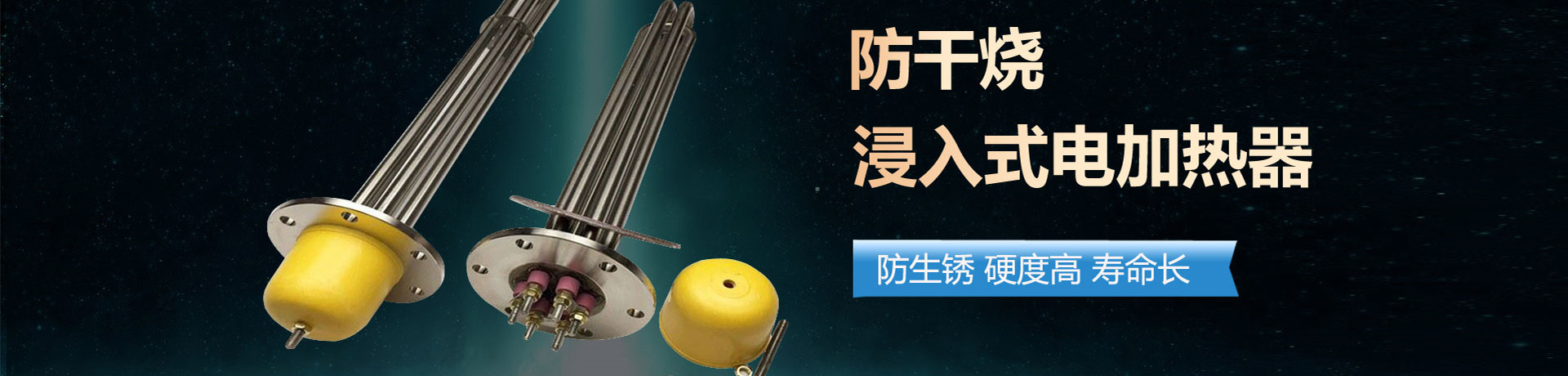

QZD-10 Stainless Steel Frame Heater
High-temperature resistance wires are evenly distributed inside a high-temperature resistant stainless steel seamless tube, and the gaps are densely filled with crystalline magnesium oxide powder that has good thermal conductivity and insulation properties. This structure is not only advanced and highly efficient in heat transfer but also ensures uniform heating. When current passes through the high-temperature resistance wires, the generated heat diffuses through the crystalline magnesium oxide powder to the surface of the metal tube, and then transfers to the heated object or air, achieving the purpose of heating.
An electric heater refers to an electrical appliance that uses electrical energy to achieve a heating effect. It is small in size, high in heating power, and widely used. It adopts intelligent control mode, has high temperature control accuracy, and can be connected to a computer network. It has a wide range of applications, long service life, and high reliability. The core of the heater principle is energy conversion, and the most common is the conversion of electrical energy into thermal energy.
Heaters are commonly used electric heating devices. People are increasingly dependent on them.
For example, an electric heater uses metal to generate eddy currents in an alternating magnetic field, causing itself to heat and absorb energy, converting electrical energy into light energy; for example, a solar water heater absorbs solar radiation heat energy and solar light energy (photoelectric effect) and converts them into thermal energy, or both; bioenergy is a form of energy stored as chemical energy using organisms as carriers, directly or indirectly derived from plant photosynthesis. In addition, there are energy conversion modes such as nuclear energy and wind energy, but they generally need to be converted into electrical energy for use.
1. After the heater has been running for a period of time (depending on user usage), unscrew the ignition plug to clean carbon deposits. If the ignition plug wire is burned out, remove and replace it with a new ignition plug.
2. If there is too much carbon deposit, causing a decrease in thermal efficiency, clean the heat dissipation fins on the inner wall of the water jacket and the carbon deposits inside the combustion chamber.
3. If the air intake pipe, exhaust pipe, and oil drip pipe of the heater main unit are found to be blocked by mud, clean and unblock them in time. Keep the heater compartment clean, and no flammable debris should be placed around it.
4. Ensure that the fuel tank, fuel pipe, and fuel filter solenoid valve are clean to prevent dirt from blocking the fuel circuit.
5. In the heater circulation system, use antifreeze that is suitable for the ambient temperature as the circulating heating medium.
6. The heater water pump should be inspected regularly according to user usage. If water leakage from the mechanical seal or difficulty in starting and running the pump is found, repair it in time.
7. The automatic control box, fuel filter solenoid valve, and other electrical components on the heater main unit should be maintained according to general low-voltage electrical appliance maintenance methods. The performance parameters of the automatic control box have been carefully debugged by the manufacturer before leaving the factory. Users should not modify them arbitrarily.
8. Ensure that the thermal control components are in good condition at all times, and inspect them regularly. If the micro switch is found to be malfunctioning or damaged, replace it in time.
9. The main motor used in the heater normally does not require maintenance for 5000 hours of operation. If it malfunctions due to prolonged use or other reasons, it should be inspected. Check the carbon brush wear or bearing lubrication, and add lubricating grease or replace carbon brushes if necessary.
10. During the warm season when the heater is not in use, start it regularly 4 to 5 times, each time running for about 5 minutes, to ensure that the heater operates normally the next time it is used.