
At sites involving mold preheating, pipeline tracing, or tank heating, procurement personnel often need to determine the specifications of electric heaters based on installation space, heating rate requirements, and power supply conditions. The following uses the GYQ-110 industrial electric heater as an example to summarize several common questions and answers in selection.
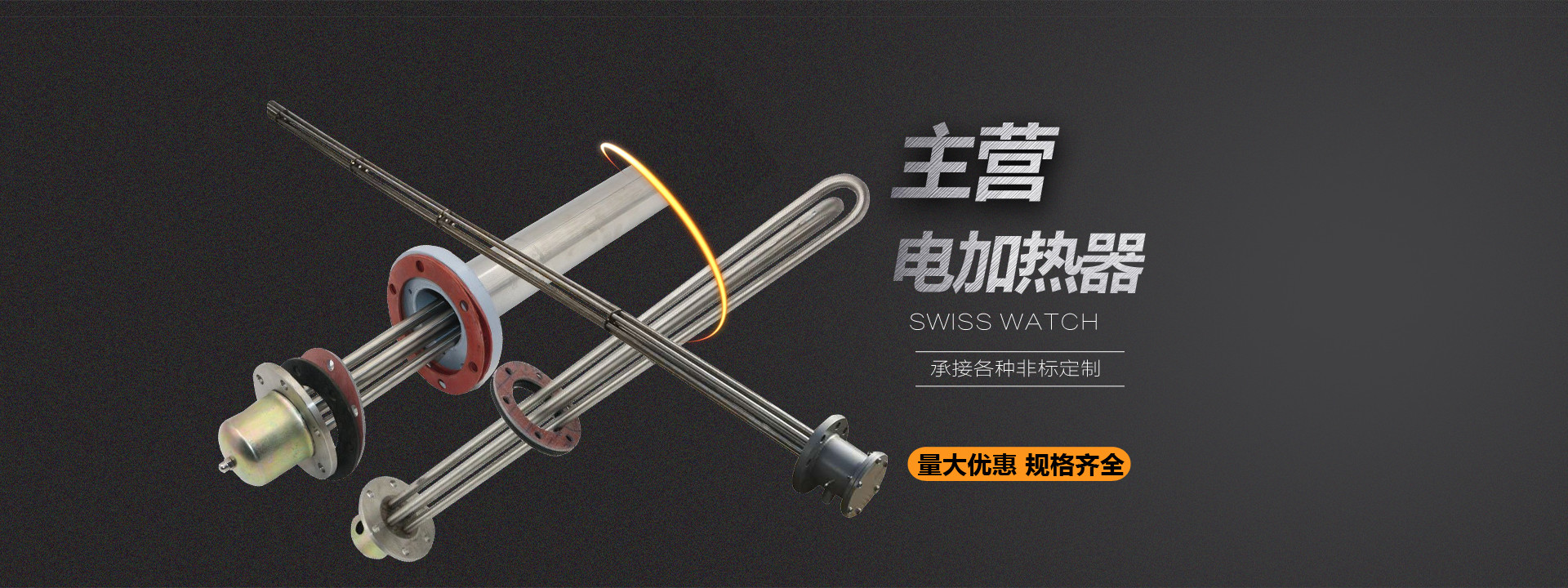
First measure the length, width, and height of the available installation area, and leave clearance for the terminal box and heat dissipation. The GYQ-110 is available in multiple length specifications, and flange or threaded interfaces can be customized according to on-site opening dimensions. If space is tight, priority may be given to a solution that reduces the radial dimension and increases the axial length, but it is necessary to simultaneously confirm whether the support structure is stable.
Power selection is related to medium mass, specific heat capacity, initial temperature difference, and target heating time. For example, to heat a certain mass of mold from room temperature to 300°C, the required power can be estimated by heat balance, and then a margin of 10% to 20% should be considered. The GYQ-110 single-unit power covers 0.2 to 8 kW, and the voltage supports 220V or 380V. When purchasing, provide the medium type and heating cycle to facilitate verification of the match.
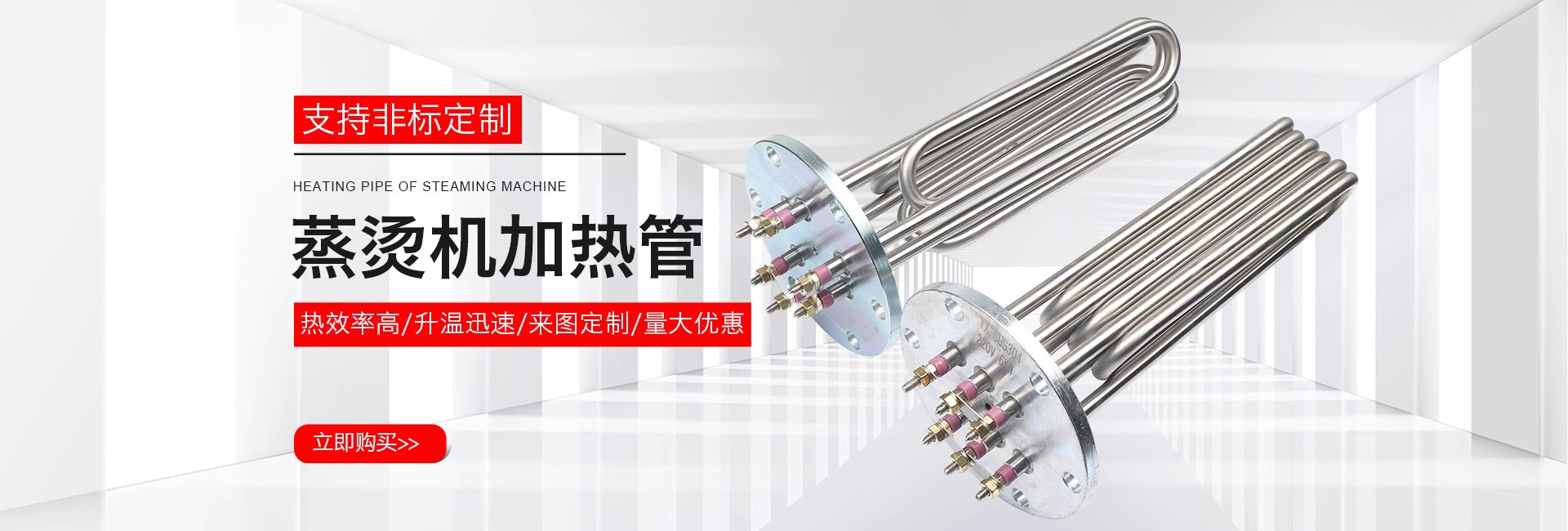
Cast aluminum heaters provide uniform heat transfer but are large in volume and slow to heat, making them suitable for molds with regular surface shapes; tubular electric heaters have a compact structure and faster response, making them suitable for occasions with limited space or requiring bending into shape. The GYQ-110 has a tubular structure, and its surface load is designed according to the medium and working conditions. During selection, it should be clarified whether it is for air heating, liquid heating, or metal block conduction heating.
Calculate the current based on power and voltage, and select the cross-sectional area according to the cable's current-carrying capacity. For example, at 220V and 2 kW, the current is about 9.1 A, so a 2.5 mm² copper-core cable can be selected; at 380V and 8 kW, the current is about 12.2 A, so 4 mm² is recommended. The protection rating of the terminal box should be determined according to the on-site environment, and humid or dusty occasions must be noted.
At minimum, the following should be provided: medium name and state, working temperature, installation space dimensions, power supply voltage and number of phases, interface form, protection requirements, and quantity. If there are requirements for heating time or temperature control accuracy, they should also be stated together so that thermal calculation and structural confirmation can be carried out.

